

The Perfect Trap: How the Relationship between Humans and AI Is Transforming

Artificial intelligence is increasingly becoming an integral part of our life. We are now so used to its help and services that we get completely lost when we can’t connect to the internet. Could a person fall in love with AI? What will its humanisation lead to? These and other questions were discussed at this year’s LSES Christmas movie seminar, which was dedicated to Spike Jonze's film Her.
Vadim Radaev, Head of the Laboratory for Studies in Economic Sociology, First Vice-Rector of HSE University, recalled that the participants of last year’s seminar discussed the film Upgrade by Leigh Whannell (2018), analysing the topic of a person’s gradual transformation into a robot both allegorically and at the physical level—starting from prostheses and ending with chipping. This year, it was time to talk about the relationship between humans and artificial intelligence, particularly, whether is it possible to love an AI not just allegorically or metaphorically, but in a romantic sense.
The idea of a love affair with a computer system did not come out of nowhere, notes Vadim Radaev. Authors and screenwriters have long told stories of humanoid robots that must obey the commands of their owners. Such creations were designed not as assistants, but as slaves.
Vadim Radaev
‘However, androids turned out to be a dead-end idea, and we moved from robots to neural networks, holograms, and so on. That is, we abandoned the idea of physicality, the idea of physical contact, in favour of virtual communication,’ explains Professor Radaev. Now, humanity is showing great interest in AI.
Since the beginning of 2022, interest in neural networks has increased by more than 15 times. Personal communication with AI is also expanding, with about 75% of marketplaces, 54% of pharmacies, 35% of retailers, 23% of banks and 15% of insurance companies utilising chatbots to communicate with customers.
The number of voice assistants has increased 3.5 times over the year. What is more, personal communication with them is becoming more and more intimate.
There is a qualitative transformation underway that sees AI going from assistant and slave to partner and friend. Developers strive to create social robots that interact with humans, simulating communication between people, meeting their expectations of real socialising. The need for clear verification so that bots cannot impersonate people is a widely discussed issue.
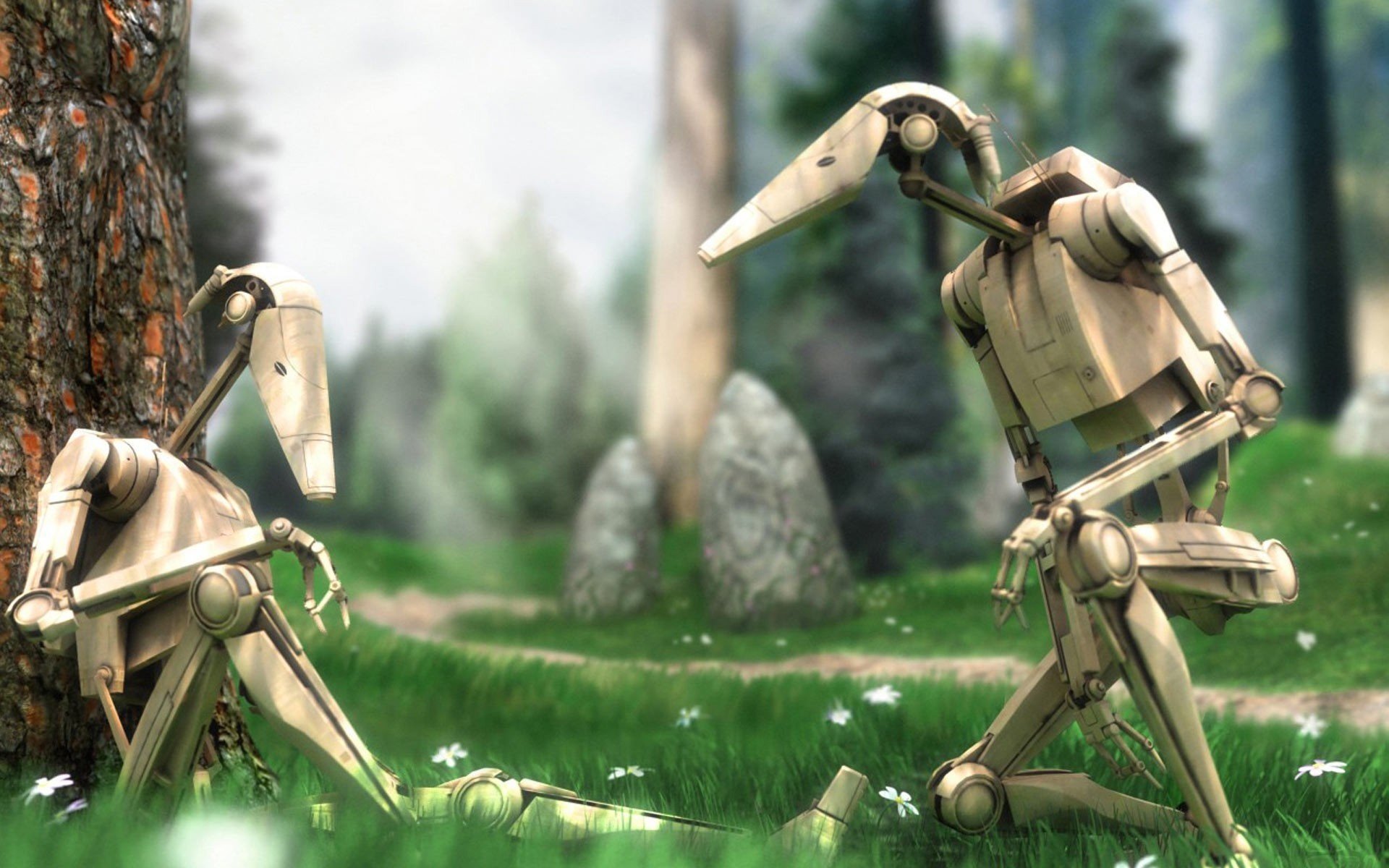
‘We prefer to communicate with robots when the situation is tightly regulated, but when it comes to personal relationships, it still feels disturbing,’ notes Radaev.
However, this trend is rapidly disappearing. For example, thirty-year-old Japanese Akihiko Kondo married virtual singer Hatsune Miku in 2018.
This is not as silly as it might seem, believes Vadim Radaev. After all, AI is much more positive than a human and has a lot of real advantages: it does not criticise, it shares its owner’s interests, it is always available to chat, and you can talk to it about anything without fear of losing face or being rejected. Unlike AI, real people are always imperfect in some way.
For those who have communication problems, including lonely and elderly people, such devices can be a salvation: they can offer both psychological support and continuous medical supervision. They are convenient, accurate, prompt, and do not impose their preferences or interests on us. And, most importantly, they can be turned off at any time.
There are examples of such social robots in cinema—partners, lovers and even children—‘perfect’ companions who require no attention or care.
Of course, such relationships are simplified, but few people want more difficulties. Real relationships are fragile from start to finish. That is why we are ready to simplify relationships for our own convenience, and the further we go, the more we do so: we switch to remote communication, turn off cameras when we are online, write messages instead of talking over the phone. It is efficient and saves a lot of time.
‘That is why we pose the question about an AI’s ability to solve problems of moral choice. Artificial intelligence cannot cope with this task by simply accumulating any amount of information. And we can’t teach it to do so—not only because we don’t understand the decision-making process well, but because we often can’t resolve moral dilemmas ourselves. Moreover, different cultures interpret them differently,’ says Vadim Radaev.
Ultimately, we often do not know what we want ourselves—a perfect model or beautiful imperfection, slavish submission or a vibrant personality. The main character of the film Her fails to resolve this contradiction, finding himself in constant confusion.
‘I think this kind of relationship with devices is becoming the perfect trap. People experience difficulties with socialisation, lose an adequate perception of the people they talk to in real life, develop mental disorders—especially emotionless models of behaviour—and have addiction problems,’ says the professor.
He recalled that in the film, the AI system Samantha outgrows such relationships, has 641 partners, shares its affection among them, and then dumps the main character. According to Vadim Radaev, the system actually did a good thing; afterwards, the main character sobers up and realises that he had started their relationship out of a fear of real ones.
‘I think that the real problem is that AI will not dump us and this “sobering up” will never come. Of course, we can love artificial intelligence, and we certainly do. But the problem is how to avoid this temptation,’ summed up Vadim Radaev.
‘The question is not whether we can love artificial intelligence. In my opinion, this is not a question at all. You can love anything. The question is whether we can love other people,’ said Vitaly Kurennoy, Director of the Institute for Cultural Studies, Professor at the HSE School of Philosophy and Cultural Studies, participant of the discussion and, in his own words, ‘techno-optimist’.
In his opinion, the key problem of the film is one of understanding.
Vitaly Kurennoy
'We are dealing with a new type of irrationality. AI is based on simple calculations and ever-increasing computing power. It has nothing to do with human thinking at all. Any attempt to insert something human into it and think that artificial intelligence understands us is doomed to fail,’ explains the professor.
The transformation of Samantha's ‘love’ corresponds directly to Plato's theory of love: first we love the body (in this case the voice), then we need to move on to a more abstract sphere, and we start to ascend to a world where the protagonist cannot follow. This is a world of numbers, science, and ideas.
‘From a philosophical point of view, there is nothing more banal than the fact that we live in augmented reality. This is such a trivial thought that it is even surprising that we can even worry about the problems of augmented reality,’ explains Vitaly Kurennoy.
The key theme of the film is loneliness, he adds. But from the point of view of the philosophy of mind, we have no reason to assert that other people exist at all.
The talk provoked a lively discussion and plenty of follow-up questions from the audience.
See also:

Larger Groups of Students Use AI More Effectively in Learning
Researchers at the Institute of Education and the Faculty of Economic Sciences at HSE University have studied what factors determine the success of student group projects when they are completed with the help of artificial intelligence (AI). Their findings suggest that, in addition to the knowledge level of the team members, the size of the group also plays a significant role—the larger it is, the more efficient the process becomes. The study was published in Innovations in Education and Teaching International.
HSE Researchers Assess Creative Industry Losses from Use of GenAI
Speaking at the IPQuorum.Music forum on October 15, Leonid Gokhberg, HSE First Vice Rector, and Daniil Kudrin, an expert at the Centre for Industry and Corporate Projects of HSE ISSEK, presented the findings of the first study in Russia on the economic impact of GenAI on creative professions. The analysis shows that creators’ potential losses could reach one trillion roubles by 2030.
‘Fall into ML Has Firmly Established Itself as a Landmark Event in Russia’s AI Scene’
On October 24–25, 2025, the AI and Digital Science Institute of the HSE Faculty of Computer Science will host the fourth annual Fall into ML 2025 conference at the HSE Cultural Centre. The event is once again supported by its general partner, Sber. The focus this year is on breakthrough research and the future of fundamental AI.
Critique of Obscure Reason: Artificial Intelligence in the Perception of Mathematicians
Mathematicians at HSE University believe that there is no need to fear losing jobs because of the widespread use of AI, while at the same time they warn against uncritical acceptance of works and projects prepared with its help. AI, however, can be a useful tool in research, creating models and processing large volumes of information.
Registration for Russian Olympiad in Artificial Intelligence 2025 Now Open
Registration for the fifth season of the Russian Olympiad in Artificial Intelligence has opened. This year, the competition has gained international status. The event is open to students in the 8–11 grades both in Russia and abroad. The winners will receive benefits when applying to Russian universities.
Global AI Trends Discussed at International Foresight Workshop at HSE University
At an international foresight workshop on artificial intelligence held at HSE University, Russian and foreign scholars discussed the trends and challenges arising from the rapid development of AI.
HSE Students Win International Olympiad in Artificial Intelligence
In the finals of the olympiad, the Russian team competed with 300 talented schoolchildren from 61 countries, including Australia, Brazil, Hungary, China, Mexico, the United Arab Emirates, Poland, Serbia, Singapore, the USA, Sweden, and Japan. The finals included team and individual rounds. In the team round, the Russian team made it into the top 10, winning a silver medal. In the individual competition, Russian schoolchildren won six gold medals, one silver, and one bronze.
‘Neural Networks Can Provide Assessments As Accurate As Humans’
Voice assistants have become part of everyday life. They can plan routes, play music and films, and answer questions. But the quality of their speech requires assessment. To address this, students of the Applied Artificial Intelligence Workshop at the HSE University and VK Engineering and Mathematics Schoolhave developed neural networks capable of evaluating speech synthesis.
HSE to Entrust Routine CPD Programme Development to AI
HSE University, together with the EdTech company CDO Global, is launching AI-based constructors to streamline the design of continuing professional development (CPD) courses. The new service will automate the preparation of teaching materials and assessment tools, significantly reducing the time and resources required of lecturers and instructional designers.
HSE University Becomes Absolute Leader in AI Alliance Ranking of Universities
TheAI Alliance Russia has announced a new ranking of Russian universities based on the quality of education in the field of AI. A total of 203 universities from 68 Russian regions participated in the ranking. HSE University was the first to join the highest A++ group.