

Russian Students in More Difficult Circumstances Improve Their Academic Performance
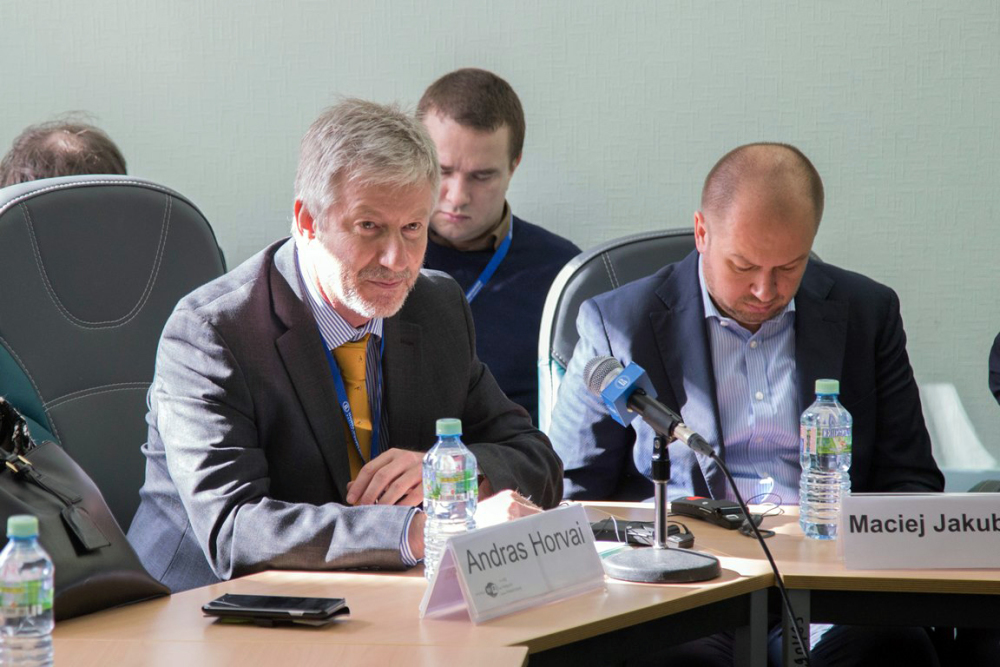
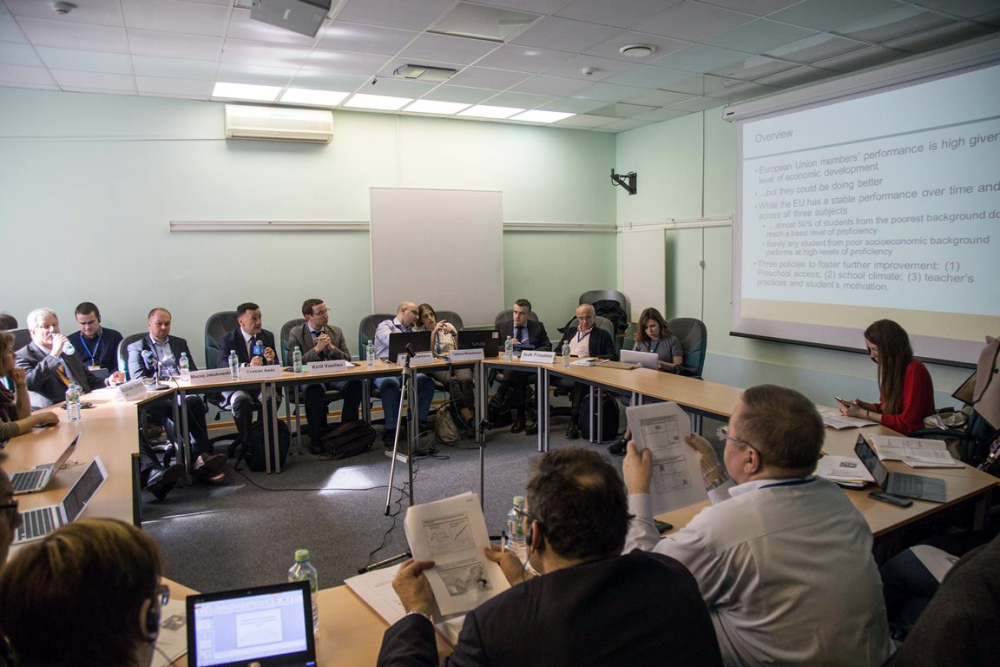
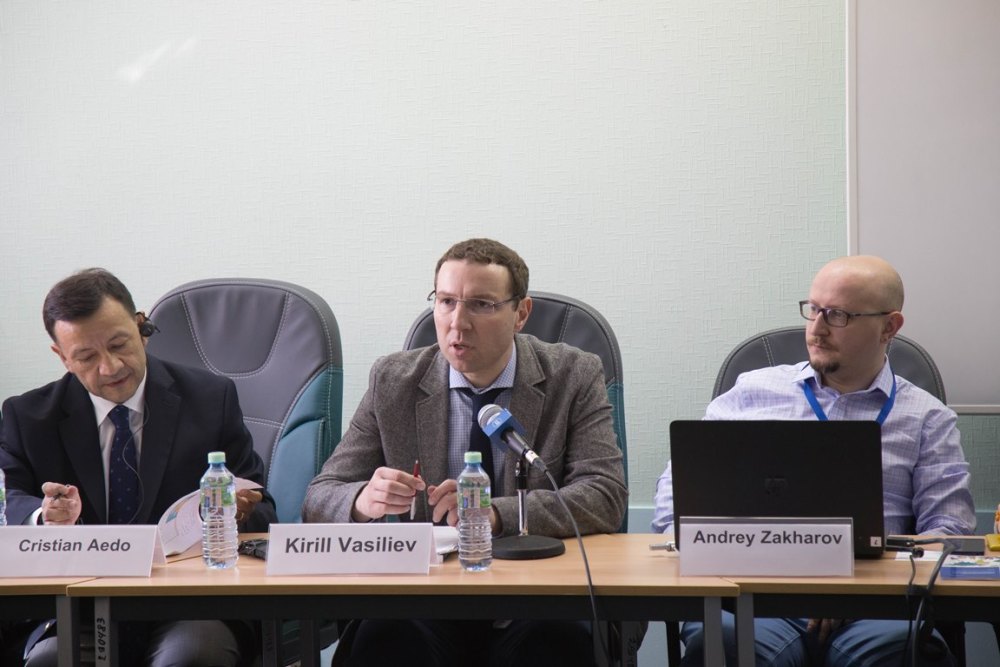
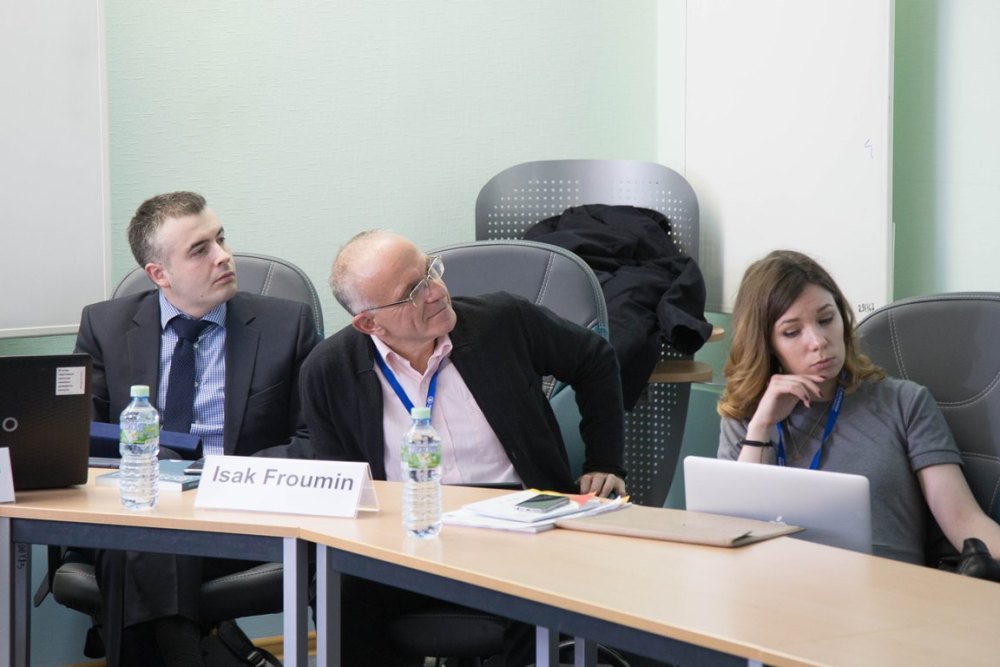
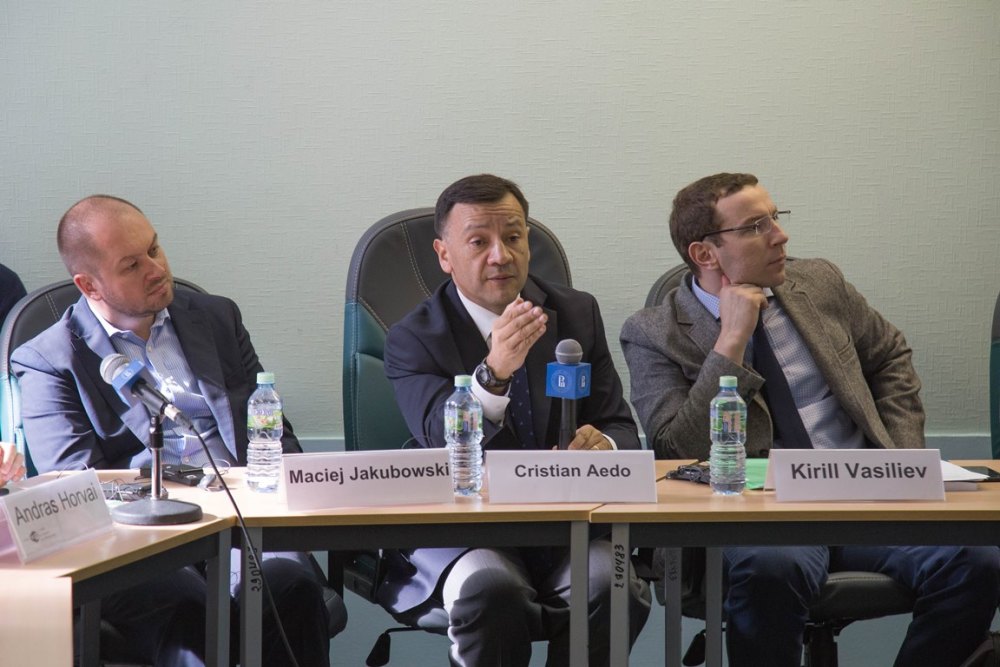
The International Symposium on Economics and Sociology of Education is being held on April 11-14 as part of the XVIII April Conference on Economic and Social Development. On April 11, experts discussed the dynamics of educational outcomes in Russia and beyond (based on data culled from international projects to monitor the quality of education) at a roundtable session organized by the World Bank.
The keynote topic of the symposium, which is dedicated to problems in education, is how to assess the effects of the various changes in this area. ‘We're not only speaking about the things we need to change, we also must ask ourselves what happened after the changes,’ explains Isak Froumin, Academic Supervisor of the HSE Institute of Education. As usual, not only Russian but also renowned international scholars are taking part in the discussions at the April conference.
Since the middle of the previous century, governments in many countries have tried to improve the quality of education and make it more available. This means reducing the disparities among students from different social groups. In addition, international comparative studies of educational quality are used to assess the effectiveness of these measures. Data comparisons in dynamics offer the most interesting results. For instance, how the situation has changed during the period of Russia’s participation in one of the most popular studies — the PISA (Programme for International Student Assessment).
For the first time, the competencies of 15-year-old Russian students were measured in the early 2000's as part of the PISA, and the most recent results were obtained in 2015. The students’ competence in mathematics and reading literacy has improved significantly. There also was a small increase in scientific knowledge. In general, Russia shows good results compared to European countries. And now the recommendations on how to maintain these results and improve them are topical.
‘EU countries display rather good results in the international PISA study. However, they are not as good as they could be considering the socio-economic status of the students,’ said Cristian Aedo from the World Bank. He notes: ‘The gap in scores for students from different socio-economic backgrounds varies in different countries. For example, in France and Bulgaria, the difference between students from poor and upper class families is 2-3 years of study, according to the PISA results. The difference in results of students from cities and rural areas is also growing. Therefore, it is important to pay attention to such factors of high academic performance, school climate, student motivation, and teachers’ training. The example of Finland shows us that even students with low results in the PISA can become in-demand specialists on the labour market, if a school is able to work with them individually’.
Russian scholars also study how the results for different groups of students change depending on their financial situation, place of residence, etc.
For example, researchers at the Institute of Education analyzed how the results may change depending on whether mothers of students have obtained higher education (this is a traditional feature of cultural capital). The proportion of children whose mothers had a higher education in the sample from 2003 to 2015 (over 200 schools, around 5,000 students) grew from about one third to a half, says Andrey Zakharov, Head of the International Laboratory for Education Policy Analysis. At the same time, for instance, the results in mathematics improved mainly among the children whose mothers didn’t receive higher education, while the results of the children from families with considerable cultural capital remain the same.
Out-of-school factors play a significant role in Russia, especially the availability of the Internet and the growing popularity of social networking, whereby children living in rural areas can learn to work with information themselves
The situation with the results of students living in large cities and small towns is, in fact, similar. In large cities, improvements in math and science were not observed, while in small towns this was evident. At the same time, the proportion of mothers with higher education almost similarly increases in all residential areas, while educational infrastructure is better developed in big cities, as well as access to educational resources. It is obvious that schools are tying up loose ends and have helped those students in less favorable conditions,’ says Andrey Zakharov.
The participants of the roundtable discussed various hypotheses based on these findings. It is known that parents with higher education are always actively involved in their children's education. However, it turns out that schools have not changed their approaches to working with such children in recent years due to the lack of working educational policy. If the difference in the results of students from different social groups has diminished, how can schools organize future work with them, if they cannot ensure guaranteed improvements for students with high educational requirements? The progress of students in more difficult initial circumstances may be the result of enhancements of instruments aimed at monitoring the quality of education — unified state exams (USE), other standardized tests, and allowing schools to be more responsible for their results, as well as restructuring school networks in rural areas.
At the state level, the success of Russian students in the PISA is largely owing to the success of reforms. This includes a gradual transition to new standards (despite the fact that 15-year-olds did not study according to these standards in 2015), the introduction of the USE, and greater control over the quality of education, whereby schools themselves are more responsible for their results. Similar explanations are prevalent for European countries as well. Maciej Jakubowski, Deputy Minister at the Polish Ministry of National Education in 2012-2014, who took part in the event, also stated the results of Polish students in the PISA had been driven by effective public policy (e.g., heightened school autonomy, new principles for financing, standardized exams for students and teachers, etc.).
In any case, out-of-school factors play a significant role in Russia, such as widespread access to the Internet and the growing popularity of social networking, whereby children living in rural areas can learn how to work with information. This, in turn, can help them to solve practical tasks according to the PISA’s criteria.
See also:

Scientists Identify Personality Traits That Help Schoolchildren Succeed Academically
Economists from HSE University and the Southern Federal University have found that personality traits such as conscientiousness and open-mindedness help schoolchildren improve their academic performance. The study, conducted across seven countries, was the first large-scale international analysis of the impact of character traits on the academic achievement of 10 and 15-year-olds. The findings have been published in the International Journal of Educational Research.
24 Countries Represented at 25th Yasin International Academic Conference Held by HSE University
The Programme Committee of the 25th Yasin (April) International Academic Conference on Economic and Social Development has summed up the initial results. In 2025, 1,384 people from 24 countries and 29 Russian regions participated in the conference, with 335 of them delivering presentations.
Stuck in the Net: How Much Time Children Spend Online
On average, a schoolchild spends 48 hours a week on studies—equivalent to a six-day working week for an adult. This was highlighted by experts at the round table ‘Domains of Children’s Well-Being Evaluation for Human Potential and Evidence-Based Social Policy Development,’ held as part of the 25th Yasin (April) International Academic Conference.
Russian and Chinese Scholars Share Experience of Transformation of Doctoral Education
The Russian and Chinese postgraduate education systems originally borrowed their institutional frameworks from the Soviet Union. However, in the 21st century, they have evolved along different paths. While key performance indicators for postgraduate programmes in Russia are declining, China is seeing a rapid increase in the number of postgraduate students. These contrasting trajectories and the reforms undertaken in each country in recent decades were the focus of a roundtable discussion held as part of the 25th Yasin (April) International Academic Conference.
Nobel Laureate Proposes Solution to Markov Equilibrium Problem
In dynamic games, a Markov equilibrium involves strategies that guide players' behaviour based on the current state of the game, rather than its entire history. This approach is effective when players have access to complete information. But when uncertainty arises in the game—for instance, when players are unsure of who they are dealing with—this approach can become problematic. Eric Maskin, Nobel Laureate in Economics and Professor at Harvard University, addressed this issue in a paper presented at the XXV Yasin (April) International Academic Conference on Economic and Social Development held at HSE University from April 15 to 18, 2025.
‘The World Is Becoming More Complex and Less Predictable’: What Scientists Say about the Future
The future is now more difficult for researchers to forecast, and events that are hard to predict are playing an increasingly significant role. But there is good news too: scientists are confident that humanity will adapt to any changes. This was the focus of discussion at the International Symposium ‘Foresight in a Rapidly Changing World,’ which took place as part of the 25th Yasin (April) International Academic Conference.
Fragmentation and Bloc Formation: How the Global Economy is Changing
Sergey Dubinin, former head of the Bank of Russia and Professor of Finance and Credit at the Faculty of Economics at Moscow State University, has delivered an honorary address at the XXV Yasin (April) International Academic Conference. He spoke about the transformation of the global monetary and financial system, as well as the Russian economy.
More Children, More Happiness: HSE Experts Study Impact of Number of Children on Russians' Assessment of Happiness
Russians with children feel happier than those without children. At the same time, the number of children influences the assessment of happiness: the more children Russians have, the happier they feel. These conclusions were outlined inthe report ‘More Children, More Happiness: The Impact of the Number of Children on Russians’ Assessment of Happiness,’ presented at the XXV Yasin (April) International Academic Conference on Economic and Social Development, held on April 15–18 at HSE University. The study was conducted by Elena Churilova, Senior Research Fellow, and Dmitry Jdanov, Chief Research Fellowat HSE International Laboratory for Population and Health.
HSE Expands Cooperation with Gulf Countries
HSE University and the Centre for International Policy Research (Qatar) have agreed to collaborate in the field of social sciences, with plans for joint research, academic exchanges, and regular expert engagement. The agreement was signed during the roundtable ‘State Capacity and State Resilience in the Global South,’ held as part of the 25th Yasin (April) International Academic Conference at HSE University.
‘We Grow Old before We Become Rich’: How BRICS Countries Can Achieve Economic Growth
Due to population aging, many countries aiming for economic prosperity have limited time left to undergo economic transformation, according to the honorary report Narratives Versus Reality on Employment and Demography: How Undermining Institutions Can Push Countries Out of the ‘Narrow Corridor’ by Santosh Mehrotra of the University of Bath. The report was presented at the XXV Yasin (April) International Academic Conference.