

Five Strategies for the Future: Key Achievements of HSE Strategic Projects in 2024

During the past year, scientists at HSE University have worked on five strategic projects aimed at advancing key areas essential to the development of modern individuals and society. Each of these projects is unique, yet they share common goals: creating innovative product solutions, generating fresh ideas for the economy, social sector, science, and education, and contributing to the university's research potential.
HSE University's Strategic Projects are carried out by distributed teams of researchers as part of the Priority 2030 Federal Academic Leadership Programme. These are comprehensive, interdisciplinary, full-cycle initiatives designed to address pressing challenges in Russia’s scientific, technological, and socio-economic development.
Empowering the Individual in a Changing World
The research conducted under the Strategic Project 'Success and Self-Sustainability of the Individual in a Changing World' focuses on systematising existing tools and developing new ones to advance education and promote mental health. In 2024, the project team launched the Jobs and Skills Navigator, a platform designed to support successful career development in IT. They also developed a mobile system for self-training in psycho-emotional resilience using biofeedback and introduced Cosmos of Self-Help, a Telegram channel offering advice on mental health.
Early-career researchers developed a training course for teachers on using generative AI, a tool for diagnosing dyslexia in school students, and AI-powered assistants for figure-skating training, online courses, and psychological self-help. Additionally, a tool for assessing the quality of online courses is being developed in collaboration with Skillbox.
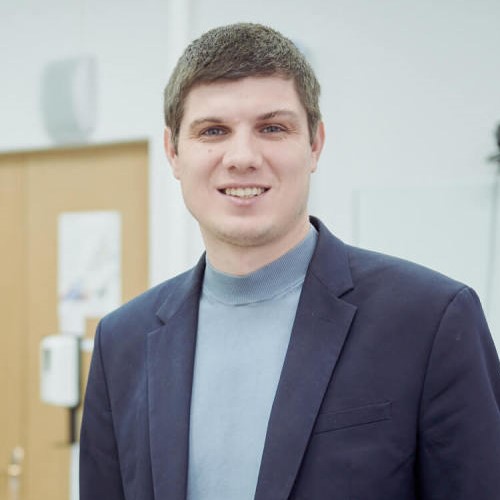
'In 2024, alongside groundbreaking empirical research, the development of a market-oriented product line for personal self-enhancement was completed. The product ideas were conceived by the team in the early stages of the strategic project and went through a complete cycle, from scientific research to practical outcomes. According to monitoring data from last year, there is a shortage of tools for individual self-enhancement and a lack of trust in them in Russia. The team has set a highly important objective of promoting and distributing the developed solutions, aiming to enhance citizens' mental health and improve the quality of educational products,' explained Evgeniy Terentev, Director of the Institute of Education and Academic Supervisor of the Strategic Project 'Success and Self-Sustainability of the Individual in a Changing World.'
Social Sustainability and Human-Centred Economy
The team behind the Strategic Project 'Social Policy for Sustainable Development and Inclusive Economic Growth' focuses on developing evidence-based social policy tools that align with the goal of fostering economic growth. Special emphasis is placed on enhancing the well-being of Russians, particularly that of families. Thus, in 2024, HSE University joined a consortium for the development, testing, and implementation of the Russian child welfare index.

The project is creating a Digital Bank of tools and solutions for evidence-based social policy—an open-access online database of cases demonstrating the proven effects of various social policy measures both in Russia and internationally. In 2024, a demo version of the Digital Bank was tested, and a set of cases for it was prepared, including studies on the impact of child benefits and social support measures on family well-being, economic and reproductive behaviour, and the effects of measures undertaken as part of long-term care systems on public health. The results obtained were used in developing an action strategy for implementing family and demographic policy and supporting large families in the Russian Federation until 2036, as well as an action strategy in the interests of senior citizens in the Russian Federation until 2030.
The strategic project team also conducts labour market research to contribute to the effective use of labour resources in the context of workforce shortages. The recommendations from the Analytical Report titled Platform Employment in Russia: Prevalence Dynamics and Key Characteristics of Those Employed, prepared by researchers at HSE University, were used in the preparation of the ‘Labor Market Management’ federal project under the ‘Human Resources’ national project and in the development of the ‘Efficient and Competitive Economy’ national project.
In order to promote the principles of sustainable development in the Russian corporate environment, large-scale studies such as the collective monograph Russian Corporations in the New Reality: Financial Strategies on the Path to Antifragility and the analytical report ESG Practices in Russian Metallurgical Companies were published. Specialists for the sustainable development economy are trained in the master’s programmes ‘Sustainable Business Management’ and ‘Executive Master in Finance: Financial Leader of the Future.’
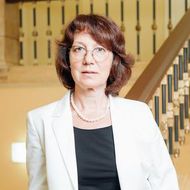
'The high quality of human potential, the solidarity and cohesion of Russian society, and the existence of a supportive environment for bearing and raising children are the foundations upon which Russia will rely for economic development and safeguarding its national sovereignty,' emphasised Lilia Ovcharova, Director of the Institute for Social Policy and Academic Supervisor of the Strategic Project 'Social Policy for Sustainable Development and Inclusive Economic Growth.'
Forecasting in Conditions of Uncertainty
The Strategic Project 'National Centre of Science, Technology and Socio-Economic Foresight' aims to create a global centre of excellence in forecasting and foresight at HSE University. Using advanced methodologies, short-, medium-, and long-term forecasts are being developed to offer a comprehensive vision of Russia and the world's future. The report Scenarios for the Development of the Russian Economy in the Context of Geopolitical Turbulence, which includes an updated forecast of Russia's development up to 2030 across four scenarios, continues to attract significant interest from major private and public companies. Drawing on a survey of a unique panel of experts (over 500 leading Russian specialists), consensus forecasts have been developed regarding the medium-term prospects for key areas of the economy and social sphere.
A significant innovation in 2024 was the launch of a series of quarterly newsletters titled Trends. Events. Figures, focusing on Russia's development trends across 14 areas, including macroeconomics, geopolitics, and demography. The materials from the January–May 2024 issue alone generated over 300 media reports.
Several materials related to the strategic project have been published, including the collective monograph The Future of World Science, which examines the impact of global economic and social trends on science and explores the prospects for technological development in the years ahead.
Teams of early-career scientists, including those from HSE University's regional campuses, are actively engaged in this work. They conduct research on topics such as forecasting companies' financial performance, sanctions against Russia, investments in public infrastructure renovation, and factors influencing public willingness to engage in charitable activities.
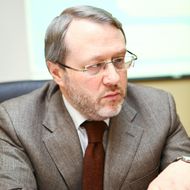
‘This year, the implementation of this strategic project focused specifically on achieving high-quality applied results that can be used in economic activities and public administration, meeting the needs of government, business, and society. A number of analytical products have been prepared to enable authorities and companies to make informed strategic decisions based on detailed forecasts and unique databases. The increased volume of commercialisation of the results obtained, along with growing media interest, demonstrates that the implementation of the strategic project enables HSE University to enhance our contribution to addressing priority socio-economic objectives,' said Leonid Gokhberg, First Vice Rector and Academic Supervisor of the Strategic Project 'National Centre of Science, Technology and Socio-Economic Foresight.'
Human-Centred AI Technologies
The Strategic Project 'Human Brain Resilience: Neurocognitive Technologies for Adaptation, Learning, Development and Rehabilitation in a Changing Environment' aims to develop ‘3N’ technologies: for neurodiagnostics, neuroadaptation, and neuroreabilitation. In 2024, unique tools were developed for the next-generation domestically produced magnetoencephalograph, software for processing data on the activity of deep cortical structures, a deep learning model for recognising and classifying structural MRI images and using them to predict cognitive test results, as well as solutions for passive speech mapping. As part of the project, the interdisciplinary team at the Centre of Excellence in Neurotechnology developed a prototype web-based service that displays structured 3D models of the brain's pathways created through 3D scanning of drugs and subsequent markup using a specialised software package.
Another key focus is the development of augmented intelligence technologies to address the complex challenges humans face in the modern world. A prototype of the AI Detector web service has been developed, enabling the detection of text written by AI. Under the guidance of Vasily Klucharev (who successfully defended the first doctoral dissertation in Russia in cognitive science in 2024), a cartographic tool is being developed to analyse the environmental conditions around schools, allowing for the assessment of cognitive and psychological well-being index in a selected area. A team from the HSE Campus in Perm received a patent for the NoteIT software, which is used to conduct experiments on music perception in school-age children.
HSE University's distributed neurocognitive cluster continues to make progress. The HSE Institute for Cognitive Neuroscience established a Cognitive Health and Intelligence Centre as part of its structure, and the St Petersburg School of Social Sciences established the Institute of Health Psychology. In 2024, two Litfond clinics (for adults and children) and the Serbsky National Medical Research Centre for Psychiatry and Narcology joined the Transfer of Neurocognitive Technologies consortium. The strategic project team actively participates in educational and awareness-raising activities, including the international schools ‘Methods and Algorithms of Consumer Behaviour Research’ and ‘Active and Passive Methods of Brain Research,’ the Cognitive Sciences track of the interdisciplinary summer school at the HSE Campus in Nizhny Novgorod, and other events. The leading researchers of the strategic project discussed these and other results at the strategic project's final seminar.
Human-Centred AI
Given the rapid advancement of AI technologies and their growing importance for Russia's technological and socio-economic development, a new Strategic Project 'Human-Centred AI' was launched at HSE University in 2024. It aims to develop a wide range of AI assistants, the implementation of which will significantly improve the productivity and decision-making processes in education, science, medicine, business, and management.
An automated database of natural hazards across different regions of Russia, along with measures for adapting to them, has been created to support the rapid assessment of areas when planning territorial development with consideration of potential climate risks. The implementation of the MVP application ‘AI Employee of the Programme Office,’ planned for 2025, will relieve HSE University's administrative staff of routine tasks and increase the speed at which assistance can be provided. AI assistants have been developed to support preoperative planning and postoperative rehabilitation in spinal surgery. Particularly noteworthy is the active involvement of early-career researchers in developing AI assistants for businesses, students, teachers, and scientists.

'Our strategic project has made significant progress in developing solutions to boost efficiency and productivity across key areas of society, from education to medicine to the environment. As part of the strategic project, efforts are also underway to support the deployment of AI models in the university's administrative processes,' explained Alexey Masyutin, Director of the AI and Digital Science Institute and Academic Supervisor of the Strategic Project 'Human-Centred AI.'
New Ideas and Competencies
In 2024, two competitions focused on priority research topics were organised by the Strategic Development Programme Office in collaboration with the strategic project teams.
As a result of the young scientists' project competition, 24 research teams received support; half were led by students, including doctoral students, while the rest were headed by HSE University staff under the age of 35. Competition participants had the opportunity to submit applications on any of the five strategic project topics. The supported projects successfully achieved their objectives, including the creation of a unique Russian Fertility Database for Russian women born between 1932 and 1983, an online service that predicts the financial performance of small and medium-sized Russian companies across various industries and regions, a Python library for preprocessing, analysing, and visualising oculomotor data, and more.
Another tool tested in 2024 for building research teams was a competition focused on competencies in artificial intelligence and machine learning. Its goal was to form a team for the Strategic Project 'Human-Centred AI.' The competition placed special emphasis on developing research competencies at the HSE campuses in St Petersburg, Nizhny Novgorod, and Perm, where, based on the results, five projects are now being implemented to create AI assistants in the fields of education and medicine. A project was supported to develop a unique MLOps platform for executing and monitoring AI models to enable management of the entire lifecycle of machine learning models. The project teams formed based on the competition results included more than 70 specialists in artificial intelligence and machine learning, with more than 15 highly qualified researchers and developers recruited to the university for the first time.
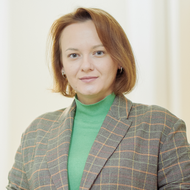
Elena Odoevskaya, Vice Rector, Coordinator of the HSE Development Programme
'In 2024, we can already discuss the completion of the three-year cycle of the Priority 2030 programme at our university. During this period, thanks to the strategic projects, we have successfully formed a new product portfolio, which includes commercially successful developments, technologies currently being tested, and entirely new ideas yet to be transformed into tangible products for customers. Indeed, the strategic projects are five large, distributed interdisciplinary laboratories that not only conduct cutting-edge research but also serve as testing grounds for new institutional mechanisms.'
See also:

HSE Scientists Optimise Training of Generative Flow Networks
Researchers at the HSE Faculty of Computer Science have optimised the training method for generative flow neural networks to handle unstructured tasks, which could make the search for new drugs more efficient. The results of their work were presented at ICLR 2025, one of the world’s leading conferences on machine learning. The paper is available at Arxiv.org.
Neural Network Trained to Predict Crises in Russian Stock Market
Economists from HSE University have developed a neural network model that can predict the onset of a short-term stock market crisis with over 83% accuracy, one day in advance. The model performs well even on complex, imbalanced data and incorporates not only economic indicators but also investor sentiment. The paper by Tamara Teplova, Maksim Fayzulin, and Aleksei Kurkin from the Centre for Financial Research and Data Analytics at the HSE Faculty of Economic Sciences has been published in Socio-Economic Planning Sciences.
Larger Groups of Students Use AI More Effectively in Learning
Researchers at the Institute of Education and the Faculty of Economic Sciences at HSE University have studied what factors determine the success of student group projects when they are completed with the help of artificial intelligence (AI). Their findings suggest that, in addition to the knowledge level of the team members, the size of the group also plays a significant role—the larger it is, the more efficient the process becomes. The study was published in Innovations in Education and Teaching International.
Advancing Personalised Therapy for More Effective Cancer Treatment
Researchers from the International Laboratory of Microphysiological Systems at HSE University's Faculty of Biology and Biotechnology are developing methods to reduce tumour cell resistance to drugs and to create more effective, personalised cancer treatments. In this interview with the HSE News Service, Diana Maltseva, Head of the Laboratory, talks about their work.
Master’s Students of HSE, University of Campinas, and Tsinghua University Publish Joint Student Research Collection
Master’s students of the HSE ISSEK programme ‘Science, Technology and Innovation Management and Policy’ have released a joint research collection with the University of Campinas (Brazil) and Tsinghua University (China) titled ‘Being Innovative or Being on the Safe Side—Managing the Risk of Failure.’ The authors explore how organisations perceive risks and embrace innovation within different cultural contexts.
‘A Turn Away from Stereotypes’: Moscow Hosts ‘Researching the Deaf Community’ Conference
On October 17–19, 2025, the third annual interdisciplinary conference ‘Researching the Deaf Community 2025: on the Periphery of Attention’ took place at GES-2 House of Culture in Moscow. The event was organised with the participation of the HSE International Laboratory for Social Integration Research. HSE University Vice Rector Irina Martusevich addressed attendees at the opening ceremony.
Exploring the Mind: HSE Scientists Discuss Cognitive Technologies of the Future
Why we make irrational decisions, how the brain responds to fakes, and whether neural networks are capable of thinking—these were the topics discussed by early-career scientists of HSE University during the NAUKA 0+ science festival. The event brought together students and experts from various fields, united by a common goal—to deepen their understanding of the human brain and cognitive technologies.
HSE Researchers Assess Creative Industry Losses from Use of GenAI
Speaking at the IPQuorum.Music forum on October 15, Leonid Gokhberg, HSE First Vice Rector, and Daniil Kudrin, an expert at the Centre for Industry and Corporate Projects of HSE ISSEK, presented the findings of the first study in Russia on the economic impact of GenAI on creative professions. The analysis shows that creators’ potential losses could reach one trillion roubles by 2030.
International Dialogue on Urban Development: Dynamic Urbanism and Green Infrastructure
In September 2025, the HSE Faculty of Urban and Regional Development (FURD) hosted a delegation of leading scholars and urban development experts from China. Two seminars were held at the Shukhov Lab with the participation of Chinese colleagues: the first focused on green infrastructure, while the second explored the theme of dynamic urbanism. In addition, a meeting between the Chinese delegation and representatives of FURD took place at the university’s main building on Pokrovsky Bulvar. The participants discussed opportunities for expanding cooperation between universities and research centres.
HSE Tops the Ranking of Universities with the Best Employer Reputation
On October 16, 2025, Forbes Education published its list of the top 20 Russian universities with the best employer reputation in 2025. The ranking was based on a survey of leading Russian employers, who named the higher education institutions whose graduates they consider the most well-prepared and are most inclined to hire. HSE University took first place in the ranking.