

HSE University and Sultan Qaboos University Discuss Cooperation in Science and Education

On May 29, 2025, a delegation from Sultan Qaboos University paid an official visit to HSE University. The meeting was held at the HSE building on Pokrovsky Bulvar and was dedicated to the development of partnership in science and education. The delegation was led by His Highness Dr Fahad Al Said, Vice Chancellor of Sultan Qaboos University. During the visit, the parties signed an agreement on cooperation and academic exchange between the universities.
The participants discussed possible formats of cooperation: academic and student exchange, joint research, teaching Arabic to HSE students, as well as joint publications in international academic journals. The representatives highlighted their interest in establishing direct contact between research teams at the two universities.
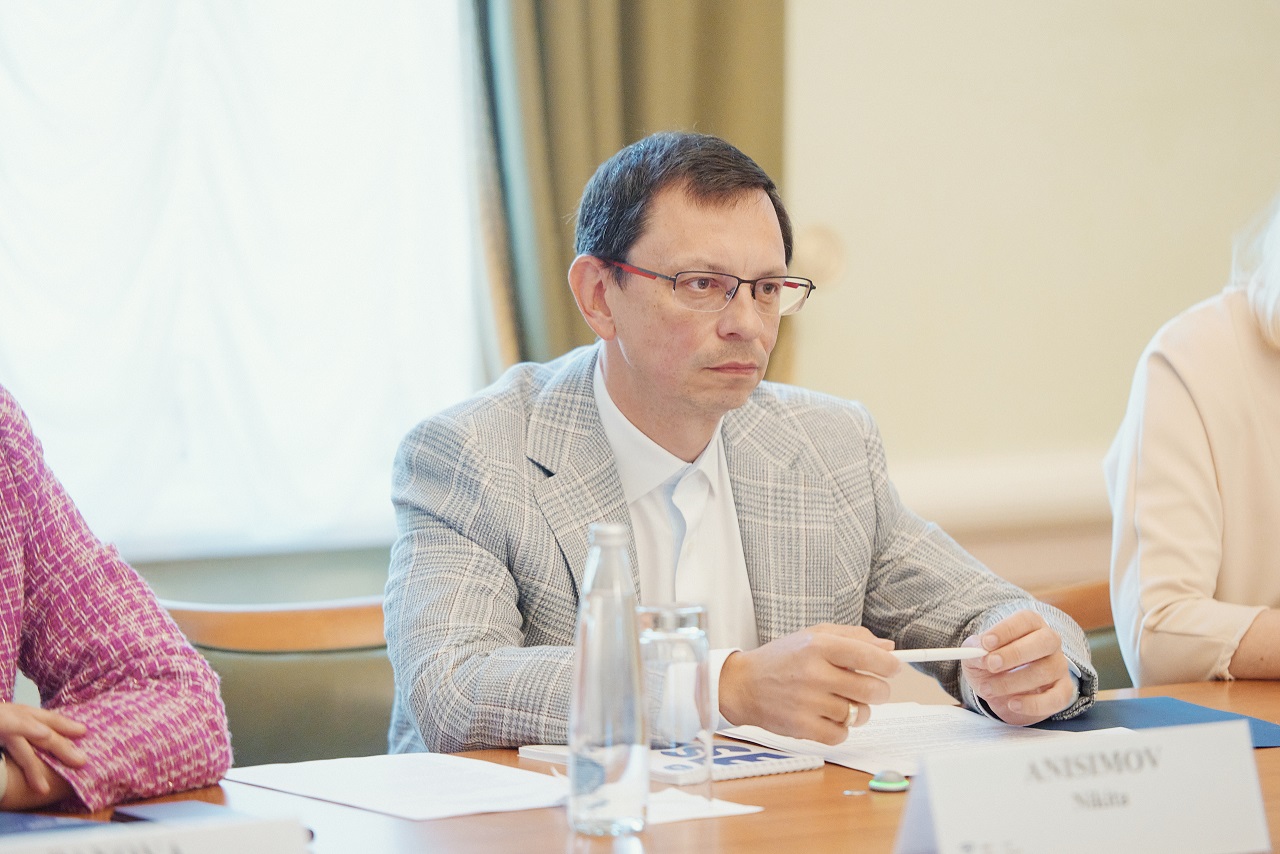
Nikita Anisimov, HSE University Rector, noted that interest in the countries of the Middle East (including the Sultanate of Oman) is growing, and stressed the importance of dialogue with universities in the region. He added that Russian higher education today focuses on technological development in both engineering and humanities, and HSE University is actively involved in implementing the priorities outlined by the Russian Government for the next decade. The rector stressed that Russian society faces several key challenges, one of which is bridging the technological gap. HSE contributes to solving these problems by creating in-demand scientific and applied developments.
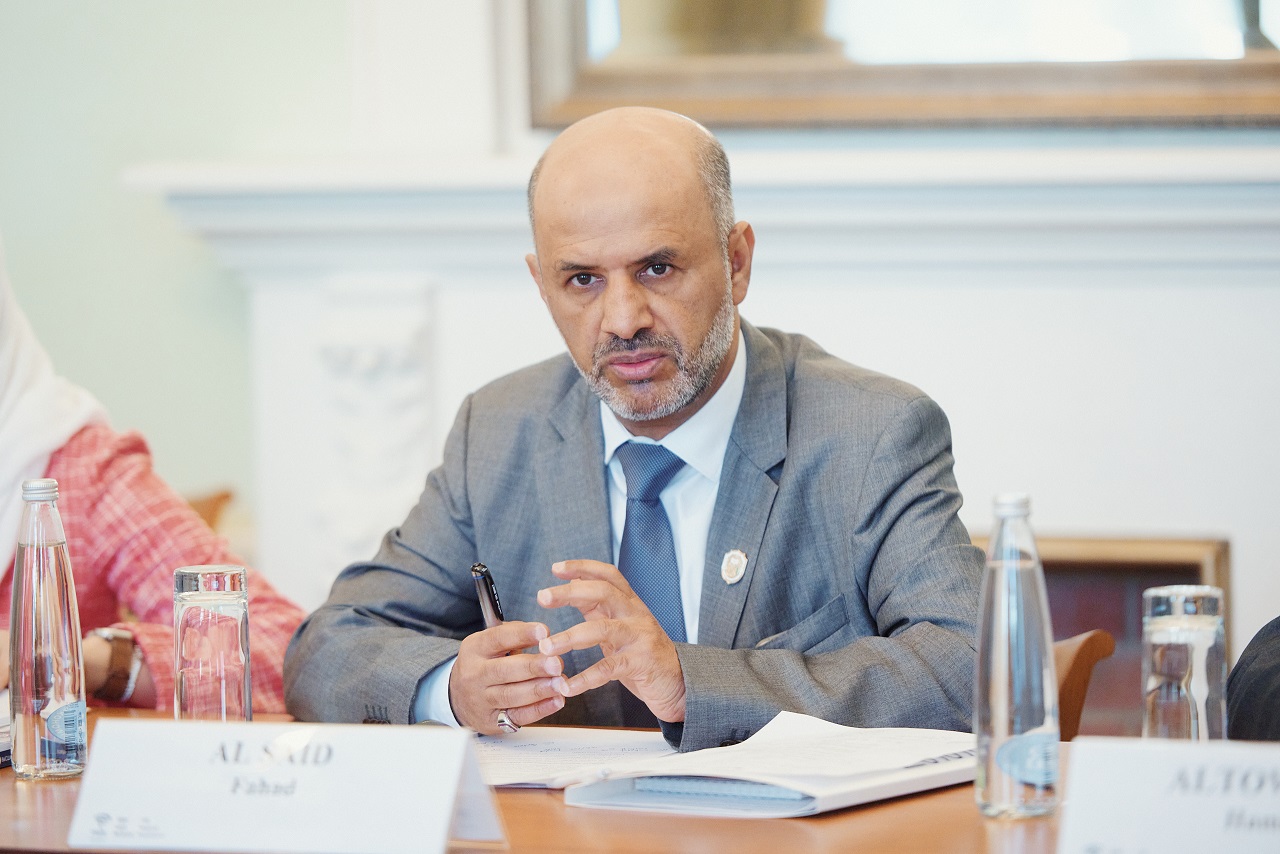
His Highness Dr Fahad Al Said, Vice Chancellor of Sultan Qaboos University, spoke about the history and key areas of the university's work, noting its strong position in international rankings, competitive university admissions, and active research activity. He expressed hope that HSE students would also have an opportunity to study in Oman, and suggested determining particular steps to develop partnership within two months.
The Ambassador Extraordinary and Plenipotentiary of the Sultanate of Oman to the Russian Federation, Hamoud bin Salem Al Tuwaih, also took part in the meeting. The following HSE representatives participated in the event: HSE University Vice Rector Victoria Panova; Nadezhda Orlova, Director of the Institute for Agrarian Studies and Academic Supervisor of the programme in Bioinformatics in Agrobiotechnology; Anna Shestakova, Director of the Institute for Cognitive Neuroscience; Anton Yanovsky, Director of the Centre for R&D Commercialization and Technology Transfer; and Kirill Kisel, Director for Internationalisation.


The parties expressed confidence that educational and scientific cooperation will strengthen relations between the states.
Sultan Qaboos University was founded in 1986 as one of two public universities in the Sultanate of Oman. The university ranks first in the country and 362nd in the world according to QS 2025. The university implements programmes in art, social sciences, economics, political science, education, law, medicine, natural sciences, and many other areas. Most of the degree programmes at Sultan Qaboos University are taught in English.
See also:

When a Virus Steps on a Mine: Ancient Mechanism of Infected Cell Self-Destruction Discovered
When a virus enters a cell, it disrupts the cell’s normal functions. It was previously believed that the cell's protective response to the virus triggered cellular self-destruction. However, a study involving bioinformatics researchers at HSE University has revealed a different mechanism: the cell does not react to the virus itself but to its own transcripts, which become abnormally long. The study has been published in Nature.
Researchers Identify Link between Bilingualism and Cognitive Efficiency
An international team of researchers, including scholars from HSE University, has discovered that knowledge of a foreign language can improve memory performance and increase automaticity when solving complex tasks. The higher a person’s language proficiency, the stronger the effect. The results have been published in the journal Brain and Cognition.
Lost Signal: How Solar Activity Silenced Earth's Radiation
Researchers from HSE University and the Space Research Institute of the Russian Academy of Sciences analysed seven years of data from the ERG (Arase) satellite and, for the first time, provided a detailed description of a new type of radio emission from near-Earth space—the hectometric continuum, first discovered in 2017. The researchers found that this radiation appears a few hours after sunset and disappears one to three hours after sunrise. It was most frequently observed during the summer months and less often in spring and autumn. However, by mid-2022, when the Sun entered a phase of increased activity, the radiation had completely vanished—though the scientists believe the signal may reappear in the future. The study has been published in the Journal of Geophysical Research: Space Physics.
‘Engagement in the Scientific Process’: HSE Launches Master’s Programme in Neurobiology
The HSE University Academic Council has elected to launch a new Master's programme in Neurobiology for students majoring in Biology. Students of the programme will have access to unique equipment and research groups, providing them with the knowledge and experience to pursue careers in science, medicine and pharmacy, IT and neurotechnology, and education and HR services.
Banking Crises Drive Biodiversity Loss
Economists from HSE University, MGIMO University, and Bocconi University have found that financial crises have a significant negative impact on biodiversity and the environment. This relationship appears to be bi-directional: as global biodiversity declines, the likelihood of new crises increases. The study examines the status of populations encompassing thousands of species worldwide over the past 50 years. The article has been published in Economics Letters, an international journal.
Scientists Discover That the Brain Responds to Others’ Actions as if They Were Its Own
When we watch someone move their finger, our brain doesn’t remain passive. Research conducted by scientists from HSE University and Lausanne University Hospital shows that observing movement activates the motor cortex as if we were performing the action ourselves—while simultaneously ‘silencing’ unnecessary muscles. The findings were published in Scientific Reports.
Russian Scientists Investigate Age-Related Differences in Brain Damage Volume Following Childhood Stroke
A team of Russian scientists and clinicians, including Sofya Kulikova from HSE University in Perm, compared the extent and characteristics of brain damage in children who experienced a stroke either within the first four weeks of life or before the age of two. The researchers found that the younger the child, the more extensive the brain damage—particularly in the frontal and parietal lobes, which are responsible for movement, language, and thinking. The study, published in Neuroscience and Behavioral Physiology, provides insights into how age can influence the nature and extent of brain lesions and lays the groundwork for developing personalised rehabilitation programmes for children who experience a stroke early in life.
Scientists Test Asymmetry Between Matter and Antimatter
An international team, including scientists from HSE University, has collected and analysed data from dozens of experiments on charm mixing—the process in which an unstable charm meson oscillates between its particle and antiparticle states. These oscillations were observed only four times per thousand decays, fully consistent with the predictions of the Standard Model. This indicates that no signs of new physics have yet been detected in these processes, and if unknown particles do exist, they are likely too heavy to be observed with current equipment. The paper has been published in Physical Review D.
HSE Scientists Reveal What Drives Public Trust in Science
Researchers at HSE ISSEK have analysed the level of trust in scientific knowledge in Russian society and the factors shaping attitudes and perceptions. It was found that trust in science depends more on everyday experience, social expectations, and the perceived promises of science than on objective knowledge. The article has been published in Universe of Russia.
Institute for Robotics Systems Established at HSE University
As decided by the HSE University Academic Council, a new Institute for Robotics Systems will be established at HSE, and with a strong fundamental base. It will cooperate with relevant departments across the university and engage students and doctoral candidates in research and development (R&D). First Vice Rector of HSE University and Director of the Institute for Statistical Studies and Economics of Knowledge, Leonid Gokhberg, discussed the expected practical results and the framework for cooperation with an industrial partner.