

‘My Thesis Defence Was a Lively Discussion’
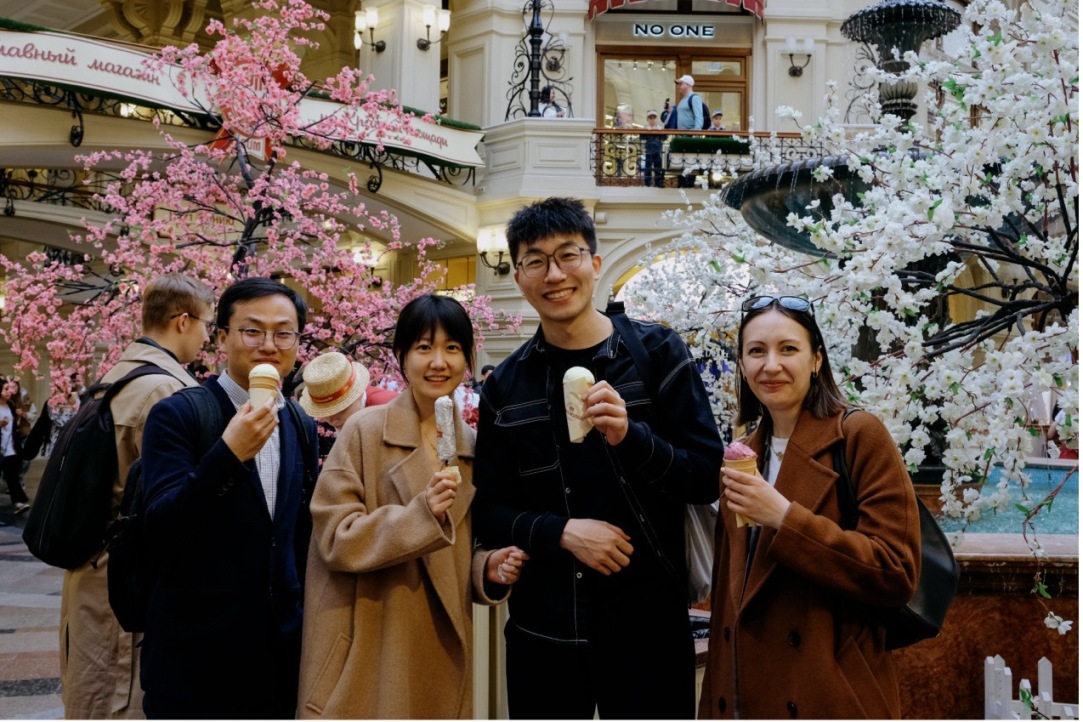
Han Zhang, from China, has worked at the International Laboratory for Evaluation of Practices and Innovations in Education at HSE University-Moscow since 2023. In October 2024, she successfully defended her PhD thesis on the relationship between collaborative peer editing and the quality of academic writing in a second language. She spoke with the HSE News Service about why she chose to join HSE University and how her research can be used to improve student writing performance.

Han Zhang
— Tell us a little about yourself.
— My name is Han Zhang, and I am from China. My hometown is the capital city of Shandong Province, which is close to Beijing. I am 27 years old, and I completed my undergraduate studies in China. To gain a more systematic understanding of education and to master practical skills, I chose Education as my master’s programme, completing it in the UK.
— How did you end up at HSE Moscow?
— Since completing my master’s programme in the UK, I have developed a strong appreciation for the overseas educational system. When choosing my next school, a friend of mine, Ruoqi, who was a student at the HSE Institute of Education, introduced me to this programme and gave me several recommendations.
I learned online that HSE University has robust teaching resources and brings together renowned professors and scholars from around the world to conduct research
Additionally, the university admits outstanding international students through rigorous competition and a strict screening process.
— What are your research interests?
— My research interests include understanding and exploring ways to improve the student learning experience and performance, with a specific focus on peer interaction and collaborative learning in both online and offline contexts. My PhD topic analyses how different online peer editing behaviours affect student writing performance in both the short and long term. This topic is worth investigating because peer editing is recognised as an effective method for enhancing linguistic and writing skills, such as increasing audience awareness, fostering reflective thinking, refining sentence structures and discourse, and supporting collaborative review and application of acquired knowledge.
I hope my study will provide teachers and instructional designers who plan to use peer editing as a pedagogical method with suggestions on how to conduct peer interaction to maximise the benefits for student writing

— What are the main conclusions of your research?
— This study examined how different online peer editing behaviours impact student writing improvement, using a pre- and post-test approach to assess the effects of comments and track changes. Results showed that comments were linked to long-term writing improvement, while track changes contributed to short-term gains, with both peer editing behaviours overall enhancing student writing.
— How did the defence go?
— It went well. The atmosphere of the discussion was very lively, and I received many invaluable questions and suggestions. Moreover, my parents attended my defence, which made it even more meaningful.
— How is living and working in Moscow?
— Although I haven’t spent much time in Moscow due to the pandemic and other complex factors, I thoroughly enjoy each visit. Aside from the language barrier, I am always impressed by the city’s unique culture, architecture, and atmosphere.
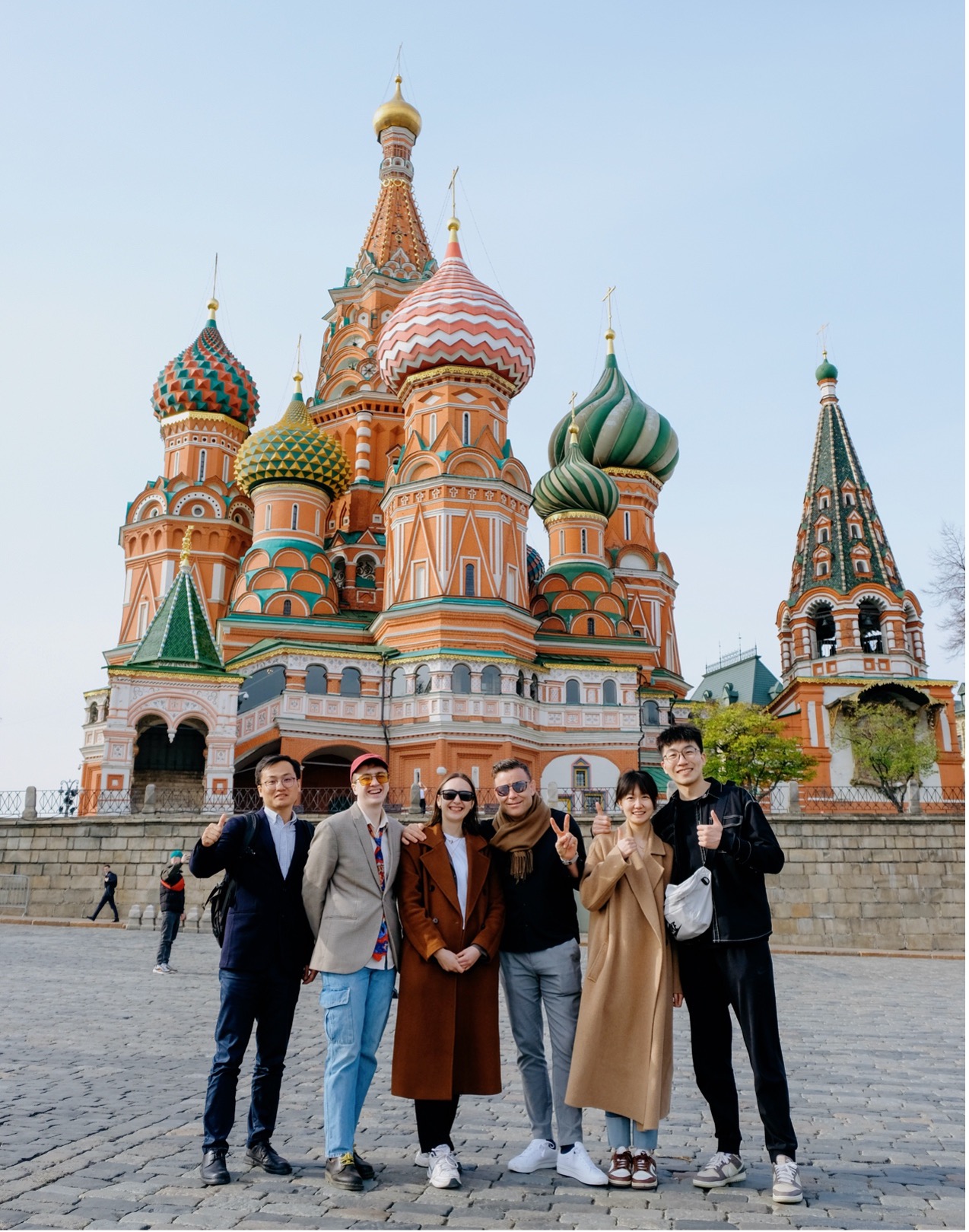
I really appreciate Moscow’s culture, stunning architecture, and rich history, which make each visit memorable.
HSE University is also impressive—its strong academic community and focus on innovative research create a stimulating environment for learning.
While I haven’t had much time in the city, I’ve managed to visit a few iconic places like Red Square and the Moscow Kremlin, and I hope to explore more of the city’s attractions in the future.
— How is your Russian? How do you cope in everyday life?
— Unfortunately, my Russian is still at a beginner level, and daily communication between me and my team member is in English, so communication with the local people is challenging. However, I manage by using translation apps and picking up common phrases for everyday situations. The girls in my lab always help me translate, which I really appreciate, and this support has made it easier to adapt.
— What's next for your research?
— Next in my research pipeline, I plan to dive deeper into analysing how peer feedback dynamics affect long-term learning outcomes across different educational settings. I’m particularly interested in exploring how feedback type and implementation impact writing skills over time. At the International Laboratory for Evaluation of Practices and Innovations in Education, I am also working on collaborative projects that assess innovative educational practices, focusing on their effectiveness in diverse learning environments. This experience is enriching my understanding of cross-cultural educational practices and evidence-based teaching methods.
Han Zhang
See also:

From Political Science in Belgrade to HR Analytics in Moscow
Andrija Djokic, from Serbia, got his master’s degree with honours from the HSE Graduate School of Business in 2022. In his interview with the HSE News Service, he talks about the advantages of studying at HSE University, the importance of a knowledge-based approach to HR management, and the challenges of pursuing a career in a foreign environment.
Eighth International U4U Online Seminar Unites Experts from 14 Countries
The HSE Online Campus hosted a two-day international U4U (Universities for Universities) seminar, which traditionally serves as a platform for exchanging expertise in online learning. This year, the event has reached a global scale, attracting international experts and representatives of universities from around the world. Together, they discussed key challenges and strategies for the development of online education. The online meeting was held in mid-November.
‘Keep Working, Keep Publishing—Consistency Matters’
Ziyuan Zhu, from Beijing, China, is an international PhD student at the Institute for Public Administration and Governance at HSE University in Moscow. In this interview with the HSE News Service, Ziyuan talks about how studies can influence one’s outlook on life, comparing public service models in different countries, and why being a Chinese student in Russia is advantageous in research.
Under a Blooming Magnolia: How Russian and Chinese Scientists Create Solar Cells of the Future
Schola continues to introduce the winners of the International Academic Cooperation competition. In today's issue, Professor Andrey Vasenko, Deputy Head of the Scientific and Educational Laboratory of Quantum Nanoelectronics at Tikhonov Moscow Institute of Electronics and Mathematics (MIEM), speaks about the joint project between his laboratory and the Peking University research team— ‘Engineering of highly efficient and stable perovskite solar cells.’
Graduate School of Business MBA Students Take Part in Offsite Module in China
MBA students of the HSE Graduate School of Business HSHSE have recently completed the international component of their studies at the School of Economics and Management at Tsinghua University. The module focused on developing business through innovation. The participants discussed the impact of new technologies on corporate structures and visited companies operating in robotics and renewable energy.
Meeting with Xinhua Delegation: Discussion on Contemporary Journalism at HSE
On October 22, 2025, HSE University hosted an open meeting with representatives of the Chinese news agency Xinhua, led by Sun Zhiping, Chief of Staff to the Director General. Participants discussed current challenges in journalism and the operational specifics of news agencies in today’s media landscape. Many students took the opportunity to ask questions and practise speaking Mandarin. The visit was organised by the Faculty of World Economy and International Affairs in collaboration with the HSE Institute of Media and the TASS news agency.
HSE Participates in Conference on International Exchange of Professionals in China
From October 21 to 24, 2025, the 23rd Conference on International Exchange of Professionals took place in Shanghai and Beijing, bringing together more than 7,000 scientists and experts from around the world. HSE University was represented by Ivan Arzhantsev, Dean of the Faculty of Computer Science, and Vasily Gromov, Head of the Laboratory for Semantic Analysis of the Centre for Language and Semantic Technologies.
‘It Was Interesting to See How Our Chinese Colleagues Work’: HSE Researchers Take Part in Hefei Summer School
This summer, Diana Sukhoverkhova, Daria Mazur, and David Kagramanyan, research assistants at the MIEM HSE Laboratory for Computational Physics, spent five weeks in China. At the Future Scientist Exchange Program (FuSEP) summer school in Hefei, they worked in new fields of science together with their Chinese colleagues. HSE's promising scientists spoke to the HSE News Service about their intense and productive time in China.
Works of HSE Art and Design Students Presented at Pingyao International Photography Festival
On September 19, the 25th Pingyao International Photography Festival (PIP) opened in Pingyao, Shanxi Province, China. The exhibition features the works of 16 students of the Faculty of Creative Industries at the HSE Art and Design School, selected following the results of the HSE Creative Open / Photoproject international competition, which received more than 300 entries.
‘I Wish Summer Were Quarterly’
Practicing and teaching yoga, chilling in Moscow parks, writing academic papers, travelling around Russia, and volunteering—these are only a few of the things HSE international students have tried over their summer break. Now, as they are getting back to studies, the students reflect on their summer experiences in academic work, professional development, travel, and leisure.