

‘Winter in Russia is a Season of Romance and Cold, Solemnity and Vitality’
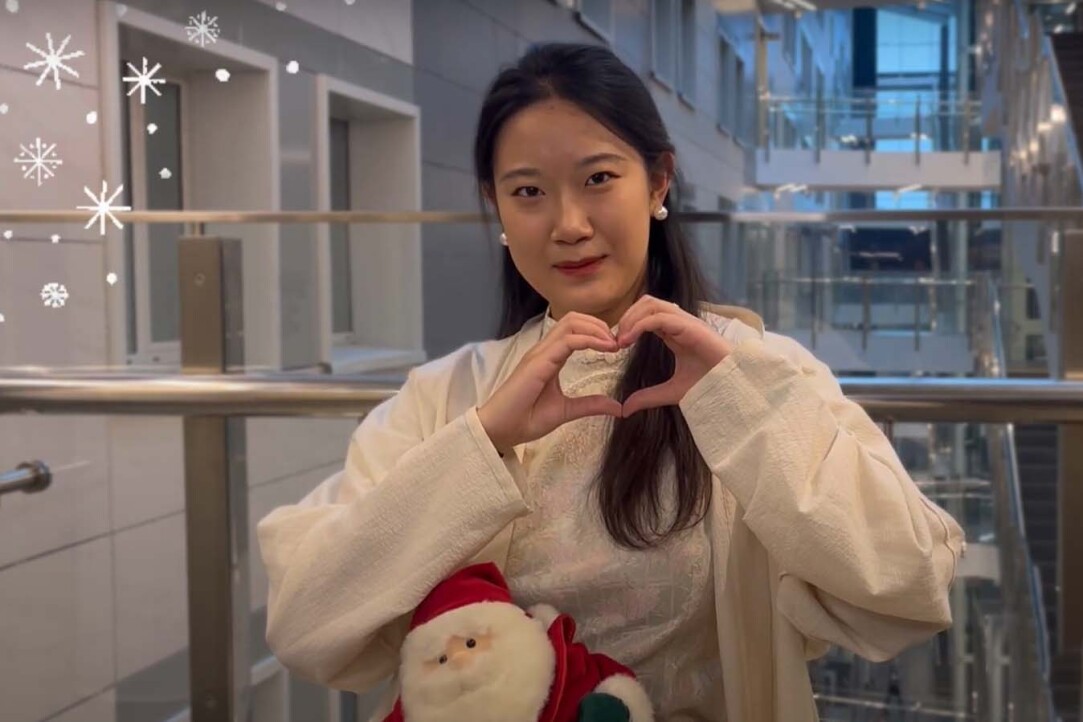
Over 450 international students from all over the globe currently study at the HSE Faculty of Economic Sciences. Some of them have recorded video greetings, talked about celebrations in their home countries, and shared their ideas on how to spend the winter holidays in Russia.
Lukas Ruf, Austria, Master’s in Strategic Corporate Finance
In Austria, we celebrate Christmas on the 24th of December. Much like Russia´s New Years celebrations, there is a calm and cosy mood, lots of food, and family time. In the evenings, there is church service called Christmette, which oftentimes includes local choirs and Glühwein afterwards. Many families have gatherings between 25th–27th of December, again with lots of food, presents, and relaxation. New Year, on the other hand, is mostly a big party. It’s usually celebrated with friends, lots of food, drinking, and having fun.
Russian winter can be harsh at times, but as long as you take the right clothes, it’s fine. I would recommend that new students get good gear for the cold: a big coat, a mask, good shoes
The number one thing you have to be careful about is slippery walkways. Always expect to fall down—you never know where the next slippery step is going to be. But overall, Russian winter can be absolutely stunning! Walking around the centre when everything is covered in snow is beautiful, and getting food at Red Square is a great activity I can recommend.
I will probably not follow any special traditions here. I might invite some friends to have a good time, watch the fireworks, etc. There is the tradition of lead-pouring, which we will probably do for fun, but it will mostly just be partying, playing games, eating good food, drinking good wine, enjoying life. And playing a traditional round of beer pong, to keep the competitive spirit alive!
Liu Xuanhan, People's Republic of China, Bachelor’s in Economics
In my eyes, the difference between Christmas and New Year in China and Russia is not very big. People say goodbye to the old year and express their expectations for the new Gregorian calendar year. For Chinese people, it is more of a prelude to Chinese New Year. But for Russian people, it is a grand holiday for getting together with family and making new wishes. New Year in Moscow is very interesting. Not only is there a New Year market on Red Square, but there is also a variety of lighting and unique activities. And there are also some activities in various parks. Everyone can actively participate and enjoy the unique Russian winter romance together.
Winter in Russia is a season when romance and cold, solemnity and vitality all coexist. It is actually not that difficult to deal with—I usually meet with friends and insist on exercising. My favourite winter sport is skiing. Unfortunately, my skiing skills are not very good...
The cold winter in Russia has left a deep impression on me, and it is a season that needs to be savoured carefully
I recommend that new international students try ice and snow sports, such as skating and skiing. Remember to keep warm, replenish calories, and take a vitamin D supplement.
During the New Year holidays, I want to go home, meet my family, and catch up with some of my old friends.
Chamod Ranaweera, Sri Lanka, Master’s in Strategic Corporate Finance
I think in both Sri Lanka and Russia, Christmas and New Year celebrations are marked by festive decorations, gatherings, and joy. However, there are cultural and religious differences in how these occasions are observed. In Sri Lanka, where Buddhism is predominant, Christmas is both a cultural event with decorations, lights, and festive meals, and a religious holiday with a focus on church service. New Year (Sinhala and Tamil New Year) is a significant cultural and religious celebration. In Russia, New Year is celebrated more widely, with both religious and secular traditions.
Russian New Year is marked by decorations, the arrival of Ded Moroz (Father Frost), and the exchange of gifts on New Year's Eve
Since this is my first winter experience, I am using various strategies to stay comfortable and healthy in the cold. These include wearing insulated and waterproof outer layers to protect against the cold and wet conditions, regularly drinking warm water, and using moisturisers and lip balms to protect my skin. You must ensure you have access to medical care, and consider getting a flu shot.
Moscow's winters can be unpredictable. You need to keep an eye on weather forecasts to plan your activities and dress accordingly. Moscow has a lot to offer during the winter months. I recommend that international students embrace the winter by trying activities like ice skating and attending winter festivals. I like to do ice skating, snowboarding, and cosy indoor activities like reading, watching movies, and sipping hot cocoa by the fireplace.
Watch the video greetings from the HSE Faculty of Economic Sciences students and staff:
See also:

Under a Blooming Magnolia: How Russian and Chinese Scientists Create Solar Cells of the Future
Schola continues to introduce the winners of the International Academic Cooperation competition. In today's issue, Professor Andrey Vasenko, Deputy Head of the Scientific and Educational Laboratory of Quantum Nanoelectronics at Tikhonov Moscow Institute of Electronics and Mathematics (MIEM), speaks about the joint project between his laboratory and the Peking University research team— ‘Engineering of highly efficient and stable perovskite solar cells.’
Meeting with Xinhua Delegation: Discussion on Contemporary Journalism at HSE
On October 22, 2025, HSE University hosted an open meeting with representatives of the Chinese news agency Xinhua, led by Sun Zhiping, Chief of Staff to the Director General. Participants discussed current challenges in journalism and the operational specifics of news agencies in today’s media landscape. Many students took the opportunity to ask questions and practise speaking Mandarin. The visit was organised by the Faculty of World Economy and International Affairs in collaboration with the HSE Institute of Media and the TASS news agency.
HSE Participates in Conference on International Exchange of Professionals in China
From October 21 to 24, 2025, the 23rd Conference on International Exchange of Professionals took place in Shanghai and Beijing, bringing together more than 7,000 scientists and experts from around the world. HSE University was represented by Ivan Arzhantsev, Dean of the Faculty of Computer Science, and Vasily Gromov, Head of the Laboratory for Semantic Analysis of the Centre for Language and Semantic Technologies.
‘It Was Interesting to See How Our Chinese Colleagues Work’: HSE Researchers Take Part in Hefei Summer School
This summer, Diana Sukhoverkhova, Daria Mazur, and David Kagramanyan, research assistants at the MIEM HSE Laboratory for Computational Physics, spent five weeks in China. At the Future Scientist Exchange Program (FuSEP) summer school in Hefei, they worked in new fields of science together with their Chinese colleagues. HSE's promising scientists spoke to the HSE News Service about their intense and productive time in China.
Works of HSE Art and Design Students Presented at Pingyao International Photography Festival
On September 19, the 25th Pingyao International Photography Festival (PIP) opened in Pingyao, Shanxi Province, China. The exhibition features the works of 16 students of the Faculty of Creative Industries at the HSE Art and Design School, selected following the results of the HSE Creative Open / Photoproject international competition, which received more than 300 entries.
‘I Wish Summer Were Quarterly’
Practicing and teaching yoga, chilling in Moscow parks, writing academic papers, travelling around Russia, and volunteering—these are only a few of the things HSE international students have tried over their summer break. Now, as they are getting back to studies, the students reflect on their summer experiences in academic work, professional development, travel, and leisure.
Ringing in the New Term
On September 1, campuses across Russia ring in the new academic year with the traditional ‘first bell’—flowers for teachers and welcomes for first‑years—while international students at HSE University share how studies begin in their home countries, from Ghana’s Akwaba week to China’s student club fair, the Democratic Republic of the Congo’s blue-and-white uniforms, and India’s Teachers’ Day.
HSE and China’s Top Universities to Launch Large-Scale Research and Education Projects
As part of the official visit of Russian President Vladimir Putin to the People’s Republic of China, the HSE delegation led by Rector Nikita Anisimov concluded new cooperation agreements with major Chinese universities. The agreements are designed to expand bilateral partnerships in education, science, and cultural exchange.
HSE Shares Its Experience of Urban Strategies at International Summer School in China
In the context of intensifying global geopolitical and technological competition, leading Chinese educational institutions—Zhejiang International Studies University and Peking University—organised an International Summer School. Their joint programme focused on studying global, regional, and urban development strategies. The HSE Faculty of Urban and Regional Development took part in this event.
How to Build a Business in the New Reality of the Chinese Market
At the international SPROUTS Business Forum in Kazan, Prof. Natalya Guseva of HSE University, Head of the ‘Eastern Perspective: Doing Business in China in Practice’ educational programme for entrepreneurs and managers, delivered a keynote address entitled ‘Competing with China: Why Old Skills Are No Longer Enough’ during a Russian–Chinese business session. Her talk attracted a large audience of business representatives, exporters, and government officials.