

Script Differences Hinder Language Switching in Bilinguals

Researchers at the HSE Centre for Language and Brain used eye-tracking to examine how bilinguals switch between languages in response to context shifts. Script differences were found to slow down this process. When letters appear unfamiliar—such as the Latin alphabet in a Russian-language text—the brain does not immediately switch to the other language, even when the person is aware they are in a bilingual setting. The article has been published in Bilingualism: Language and Cognition.
Bilinguals can differentiate between the target and non-target languages based on the global language context. In an environment where everyone speaks Russian, a bilingual fluent in both Russian and English will experience suppression of their English. In this context, Russian becomes the target language, while English remains the non-target language.
The researchers aimed to investigate how switching between target and non-target languages occurs when the global language context changes and to test the hypothesis of proactive gain control in bilinguals. This hypothesis suggests that as exposure to a non-target language increases, bilinguals activate its vocabulary to facilitate faster use. It is important that such control is exercised proactively rather than in response to already received information, and this helps prevent processing delays.
To test this hypothesis, the researchers conducted an experiment with a sample of 50 adult Russian–English bilinguals. Participants were asked to read several sentences on various topics displayed on a computer screen and answer related questions. Initially, participants' target language was Russian, but the researchers gradually altered the language context to make English the target language. Initially, Russian was the only language spoken to participants, and they were given task instructions in Russian. In the second stage, English sentences were introduced alongside Russian. In the third stage, English sentences were removed, but an English-speaking instructor joined the participants. In the final stage, participants were exposed solely to English sentences, and the experimenter spoke only English to them.
As participants performed the tasks, their eye movements were recorded, specifically the duration of gaze fixation on a word, the number of regressions to previous words, and any skipped words. It is known that longer fixations indicate greater difficulty in processing a word, while regressions suggest a need to revisit the word to better understand its meaning.
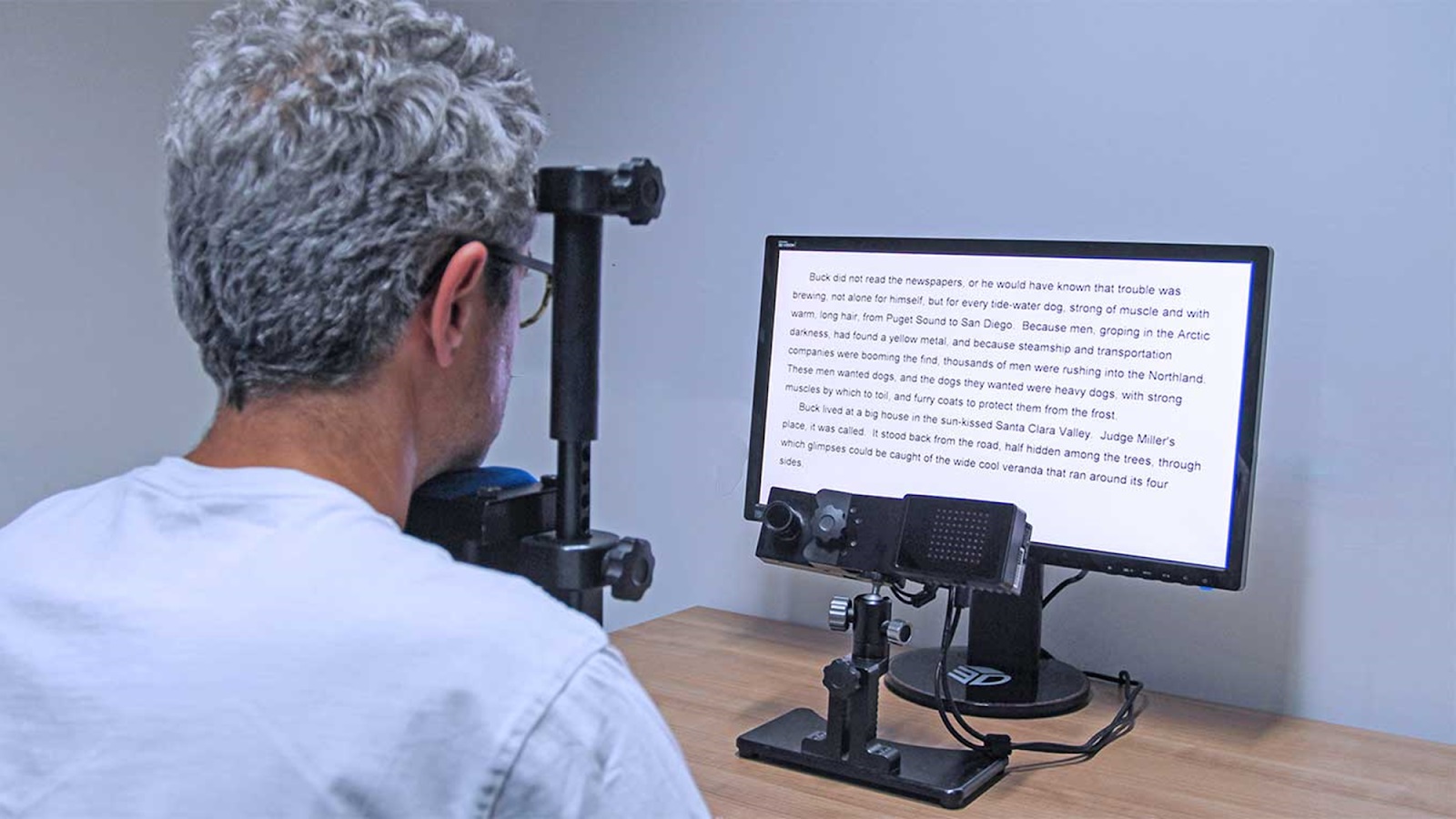
'The invisible boundary paradigm was used to measure access to the non-target language. While a participant was reading a sentence in Russian, an English translation of a word in that sentence briefly appeared before the target Russian word was displayed,' the authors explain.
For example, in the Russian sentence 'You will need to complete certain training to obtain a permit,' the English word training appeared before the Russian word for ‘training.’
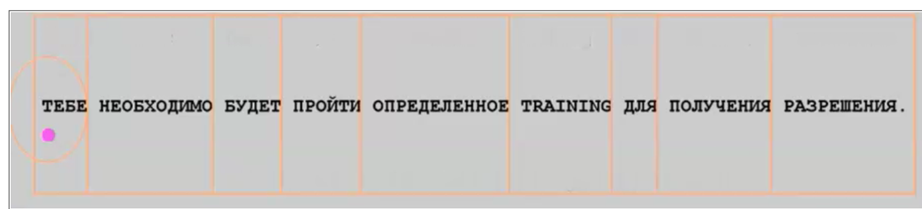
The researchers hypothesised that if access to the English language was activated, the duration of fixation on the Russian word after the appearance of its English translation would be shorter. However, this hypothesis was not confirmed. Despite the gradual introduction of English elements in the experiment, changes in the linguistic context did not influence early lexical access.
'Probably, the difference between the Cyrillic and Latin scripts is too significant, causing the brain to immediately recognise the mismatch and automatically suppress the non-target script. Additionally, it is possible that the immersion in the non-target language was not prolonged enough for its activation,' the researchers suggest.
Thus, the study findings confirmed the key predictions of the Multilink and BIA+ models, namely that lexical processing in a bilingual environment is influenced by both bottom-up and top-down factors. However, bottom-up factors dominate when the scripts differ.
The bottom level involves automatic input processing, where the brain first recognises letters, followed by words, and then their meanings. In the case of different scripts, such as Cyrillic and Latin, the brain may struggle to recognise the letters of the non-target script. The difference significantly impacts how quickly and efficiently a person can switch between languages.
The top level involves conscious input processing, which relies on the global context and prior experience. For example, if a person knows they are in a bilingual environment, this awareness can activate an expectation in their brain of encountering a word in the second language. However, this process requires more time and effort.
The researchers plan to conduct experiments involving deeper immersion in a non-target language. 'We expect that after a certain point, we will observe an increase in the speed of cross-language switching,' explain the authors.
The findings from this and potential future studies may be valuable for developing strategies to teach foreign languages, particularly reading skills, by considering the cognitive load involved in suppressing the native language, script differences, and the duration of immersion in the language environment.
See also:

Scientists Discover That the Brain Responds to Others’ Actions as if They Were Its Own
When we watch someone move their finger, our brain doesn’t remain passive. Research conducted by scientists from HSE University and Lausanne University Hospital shows that observing movement activates the motor cortex as if we were performing the action ourselves—while simultaneously ‘silencing’ unnecessary muscles. The findings were published in Scientific Reports.
Russian Scientists Investigate Age-Related Differences in Brain Damage Volume Following Childhood Stroke
A team of Russian scientists and clinicians, including Sofya Kulikova from HSE University in Perm, compared the extent and characteristics of brain damage in children who experienced a stroke either within the first four weeks of life or before the age of two. The researchers found that the younger the child, the more extensive the brain damage—particularly in the frontal and parietal lobes, which are responsible for movement, language, and thinking. The study, published in Neuroscience and Behavioral Physiology, provides insights into how age can influence the nature and extent of brain lesions and lays the groundwork for developing personalised rehabilitation programmes for children who experience a stroke early in life.
Scientists Test Asymmetry Between Matter and Antimatter
An international team, including scientists from HSE University, has collected and analysed data from dozens of experiments on charm mixing—the process in which an unstable charm meson oscillates between its particle and antiparticle states. These oscillations were observed only four times per thousand decays, fully consistent with the predictions of the Standard Model. This indicates that no signs of new physics have yet been detected in these processes, and if unknown particles do exist, they are likely too heavy to be observed with current equipment. The paper has been published in Physical Review D.
HSE Scientists Reveal What Drives Public Trust in Science
Researchers at HSE ISSEK have analysed the level of trust in scientific knowledge in Russian society and the factors shaping attitudes and perceptions. It was found that trust in science depends more on everyday experience, social expectations, and the perceived promises of science than on objective knowledge. The article has been published in Universe of Russia.
Scientists Uncover Why Consumers Are Reluctant to Pay for Sugar-Free Products
Researchers at the HSE Institute for Cognitive Neuroscience have investigated how 'sugar-free' labelling affects consumers’ willingness to pay for such products. It was found that the label has little impact on the products’ appeal due to a trade-off between sweetness and healthiness: on the one hand, the label can deter consumers by implying an inferior taste, while on the other, it signals potential health benefits. The study findings have been published in Frontiers in Nutrition.
IDLab: Fascinating Research, Tough Deadlines, and Academic Drive
The International Laboratory of Intangible-driven Economy (IDLab) was established at the HSE campus in Perm 11 years ago. Its expertise in data processing and analysis allows researchers to combine fundamental studies with applied projects, including the development of risk and cybersecurity models for Sber. The head of the laboratory, Professor Petr Parshakov, and Senior Research Fellow Professor Mariya Molodchik spoke to the HSE News Service about IDLab’s work.
HSE Psycholinguists Launch Digital Tool to Spot Dyslexia in Children
Specialists from HSE University's Centre for Language and Brain have introduced LexiMetr, a new digital tool for diagnosing dyslexia in primary school students. This is the first standardised application in Russia that enables fast and reliable assessment of children’s reading skills to identify dyslexia or the risk of developing it. The application is available on the RuStore platform and runs on Android tablets.
Physicists Propose New Mechanism to Enhance Superconductivity with 'Quantum Glue'
A team of researchers, including scientists from HSE MIEM, has demonstrated that defects in a material can enhance, rather than hinder, superconductivity. This occurs through interaction between defective and cleaner regions, which creates a 'quantum glue'—a uniform component that binds distinct superconducting regions into a single network. Calculations confirm that this mechanism could aid in developing superconductors that operate at higher temperatures. The study has been published in Communications Physics.
Neural Network Trained to Predict Crises in Russian Stock Market
Economists from HSE University have developed a neural network model that can predict the onset of a short-term stock market crisis with over 83% accuracy, one day in advance. The model performs well even on complex, imbalanced data and incorporates not only economic indicators but also investor sentiment. The paper by Tamara Teplova, Maksim Fayzulin, and Aleksei Kurkin from the Centre for Financial Research and Data Analytics at the HSE Faculty of Economic Sciences has been published in Socio-Economic Planning Sciences.
Mistakes That Explain Everything: Scientists Discuss the Future of Psycholinguistics
Today, global linguistics is undergoing a ‘multilingual revolution.’ The era of English-language dominance in the cognitive sciences is drawing to a close as researchers increasingly turn their attention to the diversity of world languages. Moreover, multilingualism is shifting from an exotic phenomenon to the norm—a change that is transforming our understanding of human cognitive abilities. The future of experimental linguistics was the focus of a recent discussion at HSE University.