

Acoustic Battles for the Harem: How the Calls of Siberian Wapiti Reveal Their Status and Individuality
Researchers at HSE University, Lomonosov Moscow State University, and the A.N. Severtsov Institute of Ecology and Evolution of the Russian Academy of Sciences have studied the distinctive vocalisations of Siberian wapiti (Cervus canadensis sibiricus) stags during the peak of the mating season, when males produce rutting calls (bugles) to attract females (hinds) and deter rivals. The scientists have discovered how the acoustic parameters of these rutting calls reflect the stag's status—whether he currently holds a harem or is still attempting to acquire one—as well as his individual characteristics. The study has been published in Journal of Zoology.
Rutting calls are a vital component of intra-species interactions in Siberian wapiti, enabling stags to attract female hinds (sometimes entire groups) and intimidate rival males. These calls are integral to the mating season. In the wild, competition for keeping a harem (a group of females) is intense, prompting male ungulates to develop sophisticated strategies that combine physical displays and vocal demonstrations of strength. Acoustic displays are highly effective because they carry over long distances and remain reliable even in low-visibility conditions, such as at night, when deer engage in most of their interactions. Rutting calls enable females to assess a male's status and quality from a distance, while also signalling to rivals whether it is worth challenging him in a fight.
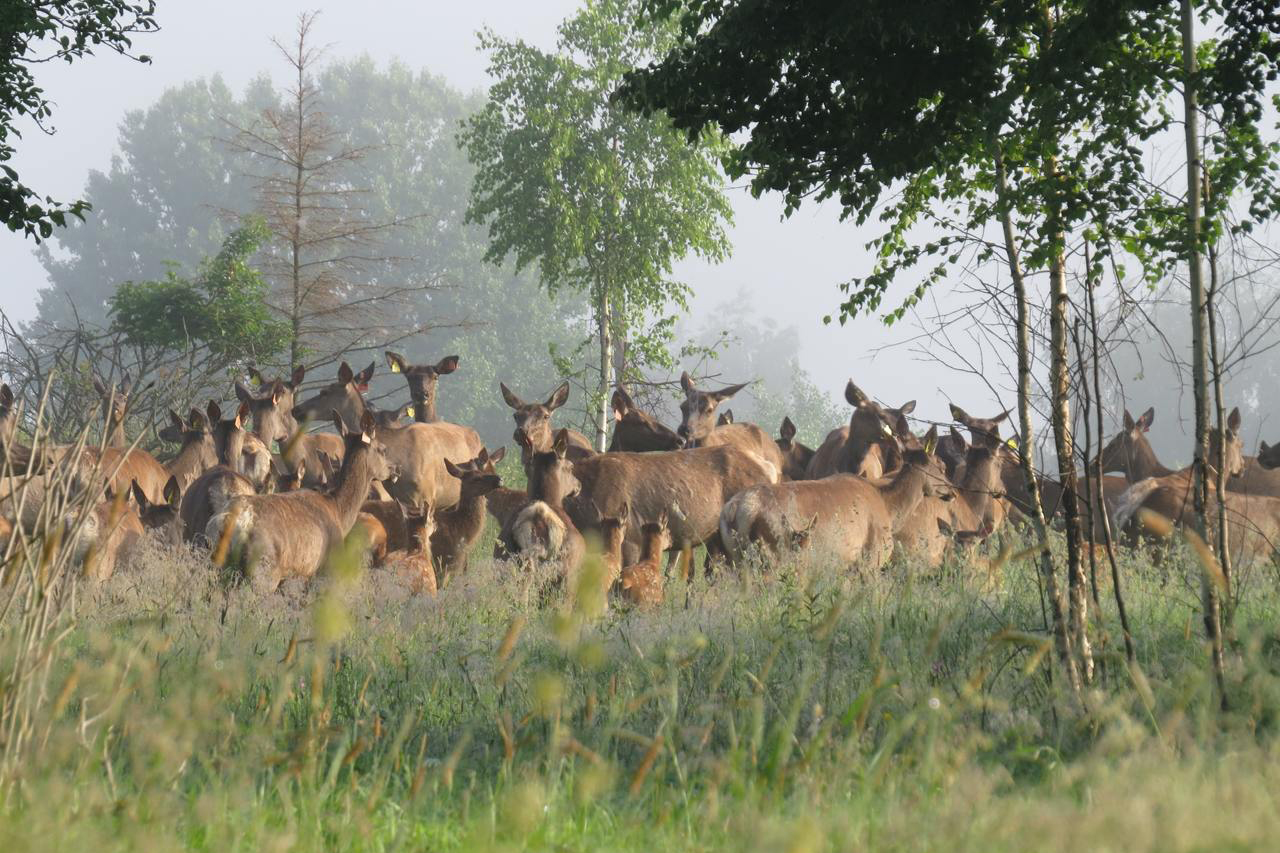
The study findings suggest that rutting calls act as a kind of 'passport,' reflecting the stag's harem-holding status. Compared to peripheral stags that remain outside a harem, harem holders produce shorter rutting calls with a higher minimum fundamental frequency.
The fundamental frequency of sound is a parameter that is subjectively perceived as the pitch of a voice and includes various measurements, such as the minimum, maximum, initial, and final fundamental frequencies. Moreover, even in a single stag, a change in status leads to alterations in the parameters of his rutting calls: when he acquires a harem, the initial and maximum fundamental frequencies of his calls decrease, while the minimum fundamental frequency increases, and the calls become shorter.
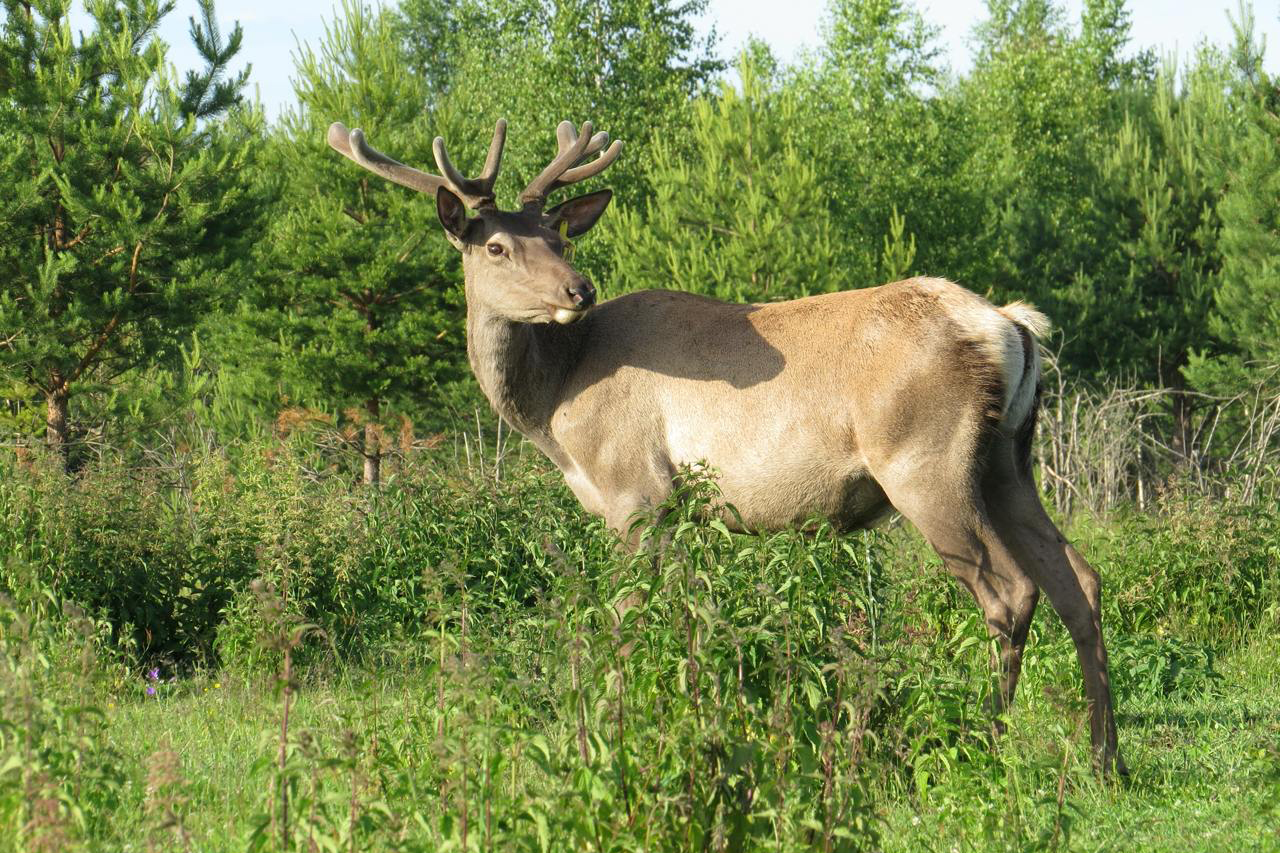
Although rutting calls can reflect a male's status and change as it evolves, their individual acoustic parameters typically remain consistent. It was previously believed that each stag has unique acoustic characteristics, a kind of vocal signature, allowing it to be distinguished from other stags. This presumed vocal individualisation is still used in nature reserves to monitor the number of stags by ear. In this method, a trained observer, stationed at a specific point, identifies the number of male deer nearby based on the differences in their voices.
According to Olga Sibiryakova, Associate Professor at the HSE Faculty of Biology and Biotechnology and co-author of the study, although individuality is encoded in rutting calls, it does not always manifest clearly enough: zoologists were able to correctly identify the individual stags in 53.2% of calls, which exceeds random chance but indicates that it is not always possible to identify a specific animal. It is noteworthy that discriminant analysis correctly classified 78.9% of bugles according to the stag's status.




'The vocalisations can convey information not only about the individual caller but also about his status, and status information is conveyed much more clearly in the sounds than individuality, which suggests that transmitting status information to others is of greater importance during the mating period,' the researcher notes.
The study findings can be applied to managing deer herds in natural environments, tracking these animals for conservation and hunting purposes, and developing non-invasive methods for studying ungulates. The use of non-invasive monitoring methods can facilitate the work of zoologists and ecologists by allowing them to track the status and behaviour of deer in various conditions without disrupting their natural habitat.
See also:

HSE Scientists Reveal How Disrupted Brain Connectivity Affects Cognitive and Social Behaviour in Children with Autism
An international team of scientists, including researchers from the HSE Centre for Language and Brain, has for the first time studied the connectivity between the brain's sensorimotor and cognitive control networks in children with autism. Using fMRI data, the researchers found that connections within the cognitive control network (responsible for attention and inhibitory control) are weakened, while connections between this network and the sensorimotor network (responsible for movement and sensory processing) are, by contrast, excessively strong. These features manifest as difficulties in social interaction and behavioural regulation in children. The study has been published in Brain Imaging and Behavior.
Similar Comprehension, Different Reading: How Native Language Affects Reading in English as a Second Language
Researchers from the MECO international project, including experts from the HSE Centre for Language and Brain, have developed a tool for analysing data on English text reading by native speakers of more than 19 languages. In a large-scale experiment involving over 1,200 people, researchers recorded participants’ eye movements as they silently read the same English texts and then assessed their level of comprehension. The results showed that even when comprehension levels were the same, the reading process—such as gaze fixations, rereading, and word skipping—varied depending on the reader's native language and their English proficiency. The study has been published in Studies in Second Language Acquisition.
Mortgage and Demography: HSE Scientists Reveal How Mortgage Debt Shapes Family Priorities
Having a mortgage increases the likelihood that a Russian family will plan to have a child within the next three years by 39 percentage points. This is the conclusion of a study by Prof. Elena Vakulenko and doctoral student Rufina Evgrafova from the HSE Faculty of Economic Sciences. The authors emphasise that this effect is most pronounced among women, people under 36, and those without children. The study findings have been published in Voprosy Ekonomiki.
Scientists Discover How Correlated Disorder Boosts Superconductivity
Superconductivity is a unique state of matter in which electric current flows without any energy loss. In materials with defects, it typically emerges at very low temperatures and develops in several stages. An international team of scientists, including physicists from HSE MIEM, has demonstrated that when defects within a material are arranged in a specific pattern rather than randomly, superconductivity can occur at a higher temperature and extend throughout the entire material. This discovery could help develop superconductors that operate without the need for extreme cooling. The study has been published in Physical Review B.
Scientists Develop New Method to Detect Motor Disorders Using 3D Objects
Researchers at HSE University have developed a new methodological approach to studying motor planning and execution. By using 3D-printed objects and an infrared tracking system, they demonstrated that the brain initiates the planning process even before movement begins. This approach may eventually aid in the assessment and treatment of patients with neurodegenerative diseases such as Parkinson’s. The paper has been published in Frontiers in Human Neuroscience.
Civic Identity Helps Russians Maintain Mental Health During Sanctions
Researchers at HSE University have found that identifying with one’s country can support psychological coping during difficult times, particularly when individuals reframe the situation or draw on spiritual and cultural values. Reframing in particular can help alleviate symptoms of depression. The study has been published in Journal of Community Psychology.
Scientists Clarify How the Brain Memorises and Recalls Information
An international team, including scientists from HSE University, has demonstrated for the first time that the anterior and posterior portions of the human hippocampus have distinct roles in associative memory. Using stereo-EEG recordings, the researchers found that the rostral (anterior) portion of the human hippocampus is activated during encoding and object recognition, while the caudal (posterior) portion is involved in associative recall, restoring connections between the object and its context. These findings contribute to our understanding of the structure of human memory and may inform clinical practice. A paper with the study findings has been published in Frontiers in Human Neuroscience.
Researchers Examine Student Care Culture in Small Russian Universities
Researchers from the HSE Institute of Education conducted a sociological study at four small, non-selective universities and revealed, based on 135 interviews, the dual nature of student care at such institutions: a combination of genuine support with continuous supervision, reminiscent of parental care. This study offers the first in-depth look at how formal and informal student care practices are intertwined in the post-Soviet educational context. The study has been published in the British Journal of Sociology of Education.
AI Can Predict Student Academic Performance Based on Social Media Subscriptions
A team of Russian researchers, including scientists from HSE University, used AI to analyse 4,500 students’ subscriptions to VK social media communities. The study found that algorithms can accurately identify both high-performing students and those struggling with their studies. The paper has been published in IEEE Access.
HSE Scientists: Social Cues in News Interfaces Build Online Trust
Researchers from the HSE Laboratory for Cognitive Psychology of Digital Interface Users have discovered how social cues in the design of news websites—such as reader comments, the number of reposts, or the author’s name—can help build user trust. An experiment with 137 volunteers showed that such interface elements make a website appear more trustworthy and persuasive to users, with the strongest cue being links to the media’s social networks. The study's findings have been published in Human-Computer Interaction.